
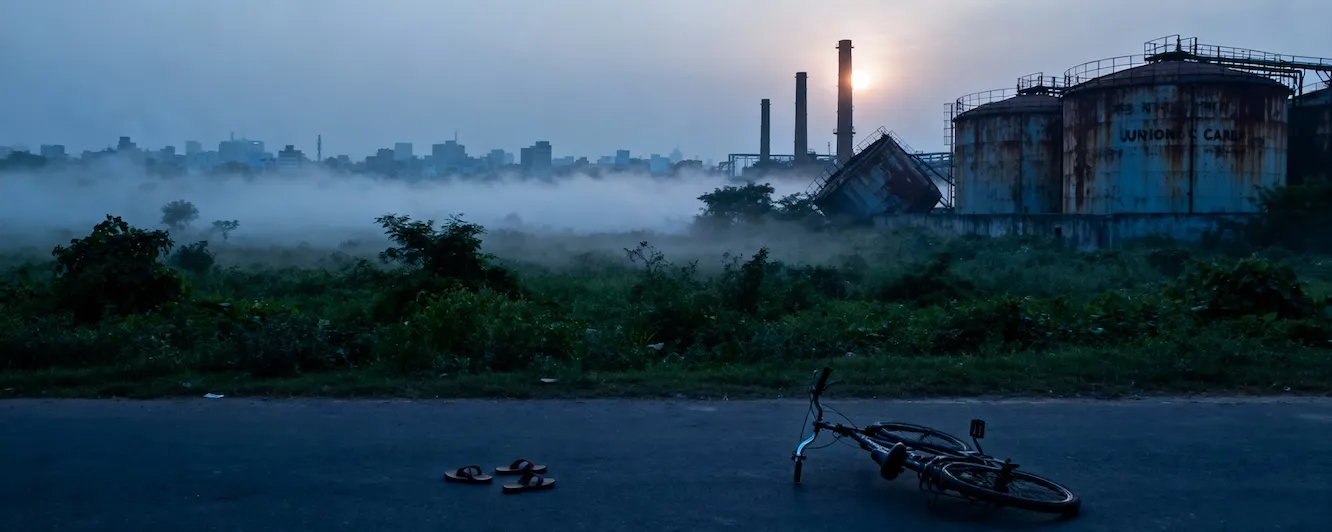
History is often written in ink, but sometimes it is written in pain. Some disasters arrive from nature without warning, yet a manmade disaster is rarely accidental. It is the outcome of ignored warnings, misplaced priorities, weak systems, and choices that put cost over human life.
After exploring the origins of manmade disasters due to industrial negligence in our previous article, we now turn to one of the darkest chapters in the history of industrial operations: the 1984 Bhopal Gas Leak Tragedy. Its aftermath still lives in the soil, the water, and the memories of survivors. More than 40 years later, the wounds have still not healed.
The scars were etched not only on the people of Madhya Pradesh, but also on the conscience of the world. The 1984 Bhopal Gas Leak was a manmade disaster of unimaginable scale that changed how the world looks at corporate responsibility, operational discipline, and safety culture.
In this story, we dissect how weak systems, ignored warnings, and poor accountability led to a night that changed history.
Bhopal: The Venue of the Manmade Disaster
Bhopal, the capital of Madhya Pradesh, is a city of culture and royalty. Founded in the 11th century by Raja Bhoj, it later flourished under the Begums of Bhopal, known for their progressive governance, education, and public welfare.

Before the world associated it with a manmade disaster, Bhopal was, and still is, the beating heart of India. Calm, beautiful, and full of heritage. The Upper and Lower Lakes gave it the name City of Lakes. It was a thriving centre of education and art, home to Bharat Bhavan, museums, galleries, and a strong textile and handicraft trade.
In the 1970s and 80s, Bhopal was emerging as a rising symbol of industrial growth in central India. New factories promised progress, jobs, and economic stability. Families looked forward to a future of prosperity. The population was a blend of government employees, small traders, and a large working class living in nearby settlements.
The people of Bhopal were known for their Ganga Jamuni Tehzeeb (composite culture), a beautiful mix of harmony and diversity. Little did they know that their beloved city was about to become the epicentre of a manmade disaster that would turn a heritage destination into a global lesson on safety, responsibility, and operational discipline.
Union Carbide: The Corporate Giant
To understand this manmade disaster, we must first know the story of Union Carbide Corporation (UCC). An American chemical powerhouse founded in 1917, UCC became a global leader in industrial chemicals, batteries, and polymers. By the 1970s, it had expanded aggressively across the world and operated in more than 40 countries.
During the 1960s and 70s, India was experiencing the Green Revolution, a national push to increase agricultural production for a rapidly growing population. The country needed stronger crop protection solutions, and UCC saw a strategic opportunity. The company proposed manufacturing pesticides within India to support farmers and supply a product that the government actively endorsed.
This led to the creation of Union Carbide India Limited (UCIL), a subsidiary where the parent company in the United States held a 50.9% controlling stake. While UCIL appeared to be an Indian public company, key decisions, technology, and operational authority remained with the American headquarters. This ownership structure would later become central to the complex legal struggle that followed the manmade disaster.

UCIL Bhopal Plant: A Ticking Time Bomb
The Union Carbide Bhopal Plant was set up in 1969 to manufacture pesticides within India. Placed strategically near railway lines and transport routes, it was promoted as a symbol of modern industrial growth. The plant produced carbaryl (Sevin), using Methyl Isocyanate (MIC) as a key intermediate chemical, a substance known for being extremely toxic and highly reactive.
When construction began, the area around the plant was largely empty. But over the years, residential colonies expanded rapidly around it, including working-class settlements like JP Nagar and Kazi Camp. From a strategic operations perspective, the plant’s location was the first domino in the chain of events that would later create a manmade disaster.
By 1984, the plant stood just a few kilometres from the Bhopal railway station. Thousands of families lived within two kilometres. Schools, hospitals, and busy marketplaces surrounded the factory. What had once been isolated industrial land slowly transformed into a densely populated neighbourhood.
Initially, the plant imported MIC. But in a push for backward integration, a common cost-saving strategy in business operations, Union Carbide decided to manufacture MIC on-site. This decision significantly increased the risk profile of the plant. It reduced logistics costs and improved profitability, but it also placed a dangerous chemical at the heart of a crowded city, setting the stage for the manmade disaster.
A Manmade Disaster in the Making
A manmade disaster is rarely a singular moment. It is a slow chain of decisions, oversights, and compromises. By 1984, the business environment had shifted dramatically. Demand for pesticides was falling, the Bhopal plant was struggling, and financial pressure was rising.
In the world of business operations, when a unit becomes unprofitable, cost-cutting becomes the default strategy. And that is where the seeds of this manmade disaster were sown.
The workforce was reduced sharply. Operators were moved between units without proper training. Critical maintenance routines were delayed or ignored to save money. Most dangerously, the refrigeration system that kept MIC stable at 0°C was switched off to cut electricity costs. This single operational decision pushed the plant closer to failure.
There were many warning signs. In 1981, a worker died after inhaling phosgene gas. In 1982, a team of US experts inspected the plant and listed 61 safety hazards, 30 of them serious. Yet most recommendations were ignored, postponed, or patched with temporary fixes.
The plant became a classic boiling frog example. Danger crept in slowly, becoming normal, until the night everything collapsed and the world witnessed one of history’s worst manmade disasters.
The Night of Suffocation and Terror
The night of 2nd December 1984 was quiet and cold. Most families living in the small homes of JP Nagar, just across the road from the factory, were asleep under thick quilts. Inside the plant, a routine cleaning operation was taking place. No one knew that within minutes, a manmade disaster would turn the night into horror.
During the cleaning, a pipe that had not been properly sealed with a slip blind allowed water to enter Tank 610, which contained nearly 42 tonnes of MIC. Water and MIC react violently, producing extreme heat and pressure. Since the refrigeration unit had been shut down to cut costs, the chemical was stored at room temperature instead of the required 0°C. Pressure rose rapidly until the safety valve burst.
Around 12:30 AM on 3rd December, a soft hiss turned into a terrifying roar. A thick white cloud of poisonous gas escaped from the vent and drifted into the dark sky. The wind direction proved fatal. It carried the gas directly toward the sleeping communities surrounding the plant.
This was the climax of the manmade disaster. People woke up coughing uncontrollably. Their eyes burned as if set on fire. Many described the sensation as breathing chilli powder. Panic broke out instantly. Families ran blindly through narrow lanes, trying to escape the invisible killer. But running only made them breathe faster, pulling in more poison with every breath.
A survivor later said, “I felt my lungs exploding. My children collapsed before I could pick them up.”
But the nightmare had only begun.
MIC: The Silent Killer in the Manmade Disaster
Methyl Isocyanate (MIC) is a highly toxic chemical used in the production of pesticides. It is colourless and invisible, but its effects are immediate and deadly. MIC reacts violently with water, creating even more poisonous compounds. Even a few parts per million can kill. The cloud that leaked in Bhopal was thousands of times higher than any safe limit, turning the manmade disaster into a large-scale human tragedy.
MIC destroys the body from the inside. It causes violent coughing, chemical burns in the lungs, nerve damage, and severe respiratory failure. Survivors later said it felt like their insides were on fire and they were suffocating while awake.
Why was MIC so deadly during this manmade disaster?
Heavier than air, it hugged the ground instead of rising into the sky. It flowed through narrow lanes and slipped into low-lying homes where people were asleep or hiding. Inside the lungs, MIC reacts instantly with moisture, causing pulmonary oedema, drowning victims in their own fluids. It attacks the eyes, causing blindness and corneal damage, and destroys the respiratory system.
While MIC had been used in controlled industrial environments before, a release of this scale in a densely populated residential zone had never happened in history. It turned the streets of Bhopal into an open-air gas chamber, and there was nowhere to run.
This silent killer became the heart of the manmade disaster that changed the world forever.
Early Response: Chaos and Confusion
The immediate response to this manmade disaster was chaotic and broken. Systems collapsed within minutes.
The public warning siren meant to alert the community was shut off quickly to avoid creating panic. When it finally sounded again, thousands had already been exposed. There was an information blackout. As patients rushed into Hamidia Hospital, doctors called the plant for details. They were told that the gas was non-toxic or only a mild irritant. No one informed them that it was MIC, a deadly chemical.
Without knowing the right antidote or that sodium thiosulfate might help, doctors could only treat symptoms blindly. The police, health workers, and volunteers gave everything they could, but without information, protective gear, or emergency plans, they were overwhelmed.
Bodies piled up outside hospitals. Streets filled with abandoned rickshaws, bicycles, and slippers left behind by those who ran for their lives. The chaotic and unprepared response magnified the destruction of the manmade disaster and exposed the complete absence of disaster management protocols.
It was a night where systems failed, and people were left to survive on their own.
The Aftermath of the Manmade Disaster
The dawn of 3rd December 1984 revealed the true scale of this manmade disaster. As the sun rose, the city witnessed scenes that were beyond imagination. Streets were filled with the bodies of men, women, children, and animals. Bloated cattle lay across the roads, blocking pathways where life once moved freely. Silence replaced the cries of the night.
The death toll remains disputed to this day. Official records say around 3,000 people died instantly, but activists and survivors believe the real number was closer to 8,000 within the first few days. Hospitals overflowed. More than 1,70,000 people were treated in a system that collapsed under the weight of suffering. There was no time for proper last rites. Trucks collected bodies and carried them to mass graves and mass funeral pyres. The City of Lakes had turned into a city of funerals.
The immediate impact of the manmade disaster was a complete breakdown of social order, infrastructure, and public health. But the tragedy did not end when the gas cloud disappeared. It continued quietly in the lungs, blood, and bones of survivors.
Health problems became lifelong companions. Breathlessness, blindness, immune disorders, chronic pain, and neurological damage haunt those who survived the night. Perhaps the most devastating impact is seen in the next generation. Children born to survivors show higher rates of congenital deformities, growth disorders, and developmental disabilities. Many experts believe the gas damaged DNA itself.
The environment suffered too. Toxic chemical waste was never fully removed from the plant site. During the monsoon, these chemicals seep into the soil and contaminate groundwater. Even today, communities near the factory drink water tainted with heavy metals and chemical residue.
The tragedy did not end in 1984. It continues silently, making Bhopal a continuing manmade disaster, one that still claims lives decades later.
The Legal Battle: Justice Delayed and Denied
If the gas leak was a tragedy of operations, what followed was a travesty of justice. The legal battle that unfolded after the manmade disaster is often cited as a classic example of how large multinational corporations can shield themselves from accountability when disaster strikes.
In 1985, the Indian government passed the Bhopal Gas Leak Disaster (Processing of Claims) Act, making itself the sole legal representative of the victims. The government then filed a lawsuit against UCC in the United States, seeking compensation. But the case was sent back to India under the doctrine of forum non conveniens, meaning Indian courts were deemed the appropriate venue for the trial.
In 1989, the case was settled out of court. Union Carbide agreed to pay 470 million USD, an amount widely criticised as shockingly small considering the scale of suffering. When divided among victims, it came down to just a few hundred dollars per person, barely enough to cover basic medical support, let alone a lifetime of treatment for chronic illness and disability. The compensation felt like an insult, not justice, deepening the pain of the manmade disaster.
Warren Anderson, the CEO of Union Carbide at the time, was declared an absconder by Indian courts after failing to appear for proceedings. He never returned to India and never faced trial. He lived the rest of his life happily in the United States and died peacefully in 2014.

For survivors, activists, and families who lost everything, the absence of accountability remains an open wound. More than four decades later, justice still feels unfinished, making the Bhopal tragedy not just a manmade disaster, but a manmade failure of responsibility.
Conclusion
The 1984 Bhopal Gas Leak Tragedy remains a powerful reminder of what happens when profit is placed above people. It was a manmade disaster created not by fate, but by reckless decisions, weak safety culture, and a collapse of oversight at every level.
Today, the abandoned Union Carbide plant stands like a rusting skeleton, swallowed by weeds and silence. Its broken pipes and corroded tanks are witnesses to a night of terror that changed history forever. They warn us that progress without responsibility is destruction in disguise.
For the world of business and operations, Bhopal teaches a lesson carved in pain. Profitability must never override safety. Strategy must include empathy. Governance must protect lives, not balance sheets. A manmade disaster can be prevented only when accountability, transparency, and care become non-negotiable.
I am positive that you found this article interesting and useful. Please subscribe to my blog by filling in your details below:
My blog has countless such articles and stories to guide you and quench your thirst for knowledge.
If you enjoy stories woven with power, passion, and desire, explore my books on Amazon. My stories unravel the fine line between success and surrender, reminding us that in a world ruled by strategy, love remains the ultimate game changer.
You can also follow me on X and Facebook to read more such stories and posts.
If you enjoy videos, you can watch interesting thoughts and stories on my YouTube channel.
PS: Gemini and/or ChatGPT have been used to create parts of this post.
Disclaimer: This article is written for informational and educational purposes only, based on details available in the public domain. It is intended to analyse the event from a strategic and historical perspective. It does not intend to absolve, accuse, or defame any individual, entity, or corporation of wrongdoing, criminal intent, or dereliction of duty beyond what has been documented in historical records and legal proceedings.
Leave a Reply