
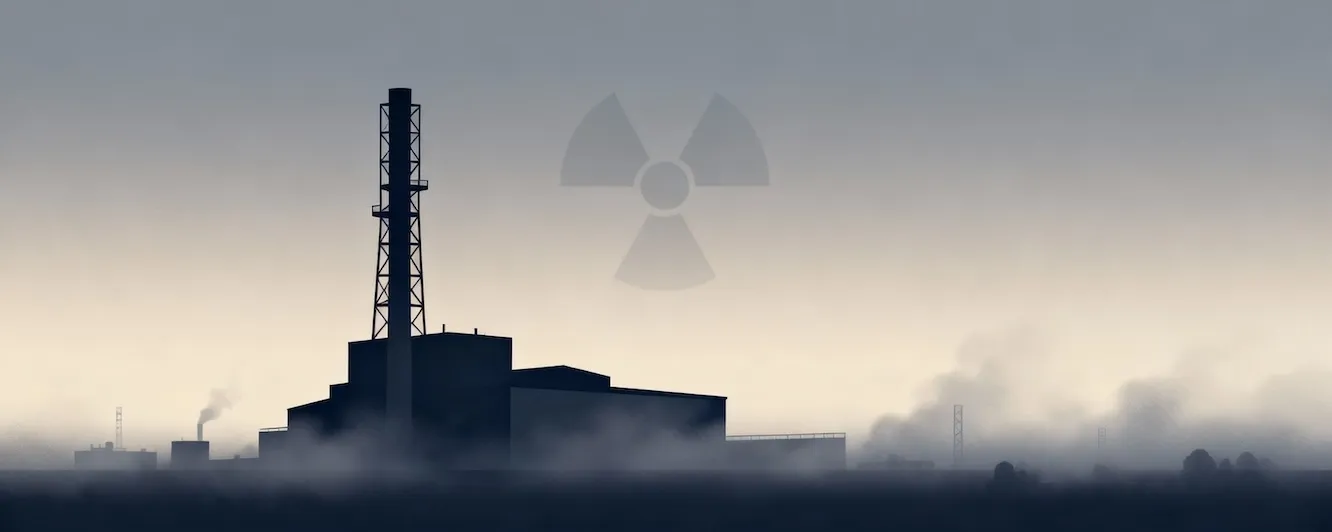
Unlike natural events like tsunamis or cyclones, a manmade disaster is created by human error, negligence or a failure of strategy and operations. They occur when ambition ignores caution, and systems break down from within. Manmade disasters damage people, resources and entire ecosystems, leaving scars that last for generations.
The Chernobyl Nuclear Explosion of 1986 is one such manmade disaster that still echoes across time. Its impact is visible today in the abandoned city of Pripyat, the sealed reactor and the long-term health and environmental effects that continue to unfold.
Chernobyl was the result of poor planning, weak safety culture and flawed operational decisions, demonstrating how even the most advanced projects can collapse without discipline and accountability. For leaders and strategy professionals, it remains one of the clearest lessons in risk management.
Let me take you through what happened that night and the chain of events that followed.
Chernobyl Nuclear Plant: A Soviet Jewel
To understand the scale of this manmade disaster, we must first understand the power and prestige of the V. I. Lenin Nuclear Power Station. Known worldwide as the Chernobyl Nuclear Plant, it stood near the town of Pripyat in northern Ukraine, then part of the USSR. It was one of the Soviet Union’s proudest achievements.
During the 1970s and 80s, the USSR was expanding its nuclear capabilities and strengthening its industrial engine. The heart of that mission, the Chernobyl plant, housed four massive RBMK-1000 reactors. At its peak, it supplied nearly 10 per cent of Ukraine’s power, making it a critical pillar of Soviet strategy and national ambition.
Pripyat, the township built for its workers, reflected this importance. It was a modern, carefully planned city with schools, parks, cinemas and sports centres. Its residents were considered the elite. Engineers, scientists and their families enjoyed a life far above the Soviet average.
Chernobyl symbolised progress and technological confidence. Yet this very symbol of advancement would soon turn into the epicentre of one of the most devastating manmade disasters.
A Manmade Disaster Waiting to Explode
Chernobyl was a manmade disaster slowly building over the years through flawed engineering, poor communication and a culture that discouraged honest discussions. What happened in 1986 was simply the moment when every weakness finally aligned.
In corporate strategy, we often refer to the “Swiss Cheese Model” of risk. It says a disaster happens only when gaps (symbolising the holes in a Swiss cheese slice) across multiple layers, like technology, process, people, and culture, line up perfectly. Chernobyl was the clearest example of this model in real life.
The RBMK reactor had a dangerous design flaw that made it unstable at low power. The people who designed the reactor knew this, but the information never reached the operators who worked on it every day. Inside the Soviet system, admitting mistakes or raising concerns was seen as disloyalty. This culture of fear created an environment where problems were hidden rather than solved.
All these cracks in the system waited for a single trigger. That trigger arrived during a routine safety test. One small step that turned into one of history’s worst manmade disasters.
A Night of Errors
On the night of April 1986, the crew at Reactor 4 prepared for a safety test. The goal was simple: to check whether the spinning turbines could generate enough power to run the cooling pumps during a blackout until the backup generators started. The irony was striking. A test meant to improve safety ended up triggering one of the world’s worst manmade disasters.
But from an operations standpoint, as stated by Murphy’s law, everything that could go wrong did go wrong.
The test was supposed to take place during the day shift, handled by the experienced team. Then came a request from the grid controller in Kiev asking Chernobyl to keep supplying power for the evening load. The test was postponed, and the responsibility was shifted to the less experienced night shift.
Before the testing began, the reactor’s power levels fell dangerously low. Xenon gas built up inside the core, smothering the reaction. According to protocol, the reactor should have been shut down. But Anatoly Dyatlov, the deputy chief engineer, was under pressure to complete the test.
He pushed the team to pull out more control rods, essentially removing the reactor’s brakes and forcing the power back up. The reactor stabilised briefly but was now in an extremely unstable state, like a car running at full speed with no brakes.
At 1:23:40 AM, the test began. The turbines slowed. Water flow dropped. Steam shot up. The reactor surged. In panic, the operators hit the emergency shutdown button, but the fatal design flaw caused a sudden spike in the reaction instead of stopping it.
The power output shot up to nearly 30,000 MW. Ten times the normal limit. The 1,000-tonne reactor lid blasted into the air. A column of blue light rose into the night sky. And in that moment, a manmade disaster of epic proportions began.
Fighting an Unknown Enemy
The first hours after this manmade disaster began were full of confusion, bad judgment and failed crisis management.
Inside the control room, no one understood what had truly happened. The dosimeters showed “0”, a reading that actually meant the radiation was so high that the devices had maxed out. But the crew assumed the instruments were faulty. Denial, as often seen in the early stages of any manmade disaster, took over quickly.
Messages sent to Moscow claimed it was only a fire and that the reactor was still intact. This false sense of control delayed every urgent decision that should have been taken.
Meanwhile, firefighters from Pripyat rushed to the scene within minutes. These men had no idea that they were stepping into an exposed nuclear core. They were told it was a simple roof fire. With no protective gear, they climbed onto the reactor building, poured water on burning graphite and picked up pieces of the reactor with their bare hands.
Many later recalled how the metal felt hot even through their gloves and how their skin began to burn, though they did not know why. The refusal of plant officials to admit that the reactor had exploded meant evacuation was delayed, allowing radiation to spread across the region.
Those first responders became the earliest victims of this manmade disaster, sacrificing themselves in the belief that they were fighting an ordinary fire. Their bravery stood in stark contrast to the chaos and denial that defined the plant’s early response.
Human and Environmental Aftershock
By morning, Pripyat woke up to what looked like a perfect Saturday. Children played outside, weddings took place, and families enjoyed their routines. The only hint of danger was the smoke rising from the plant and a strange metallic taste in the air. Yet radiation levels were thousands of times higher than normal. The invisible enemy had already begun damaging the DNA of every living thing around it.
The impact of this manmade disaster was swift and devastating. In the control room, workers absorbed massive doses of radiation, suffering burns and severe sickness within hours. Many did not even understand what was happening to their bodies.
Nature suffered first. Animals collapsed instantly. Birds dropped from the sky. Within days, an entire forest turned a burnt reddish-brown, soon to be known as the “Red Forest”, one of the most contaminated patches of land on Earth.
It took 36 long hours for the authorities to order an evacuation. A line of 1,200 buses finally entered Pripyat. Residents were asked to take only essentials for three days. None of them ever returned.
The delay, driven by fear of political embarrassment and denial, amplified the human cost of this manmade disaster, turning a terrible event into an irreversible tragedy.
Cleaning Up A Manmade Disaster
Once the true scale of this manmade disaster became impossible to deny, the Soviet Union launched one of the largest and most dangerous cleanup operations in history. It felt less like a technical project and more like a wartime mission. Helicopters circled above the burning reactor, dropping sand, lead and boron in a desperate attempt to smother the fire and limit the radiation.
The next challenge was even more terrifying. The roof of the neighbouring reactor was covered with chunks of radioactive graphite. Robots were sent in first, but the radiation was so intense that their electronics failed within minutes. With no other option, the Soviets turned to “bio-robots”: human beings.
More than 600,000 people, known as Liquidators, were brought in from every corner of the USSR. Soldiers, miners, firefighters and civilians were given crude protective gear and strict instructions. Each man had just 90 seconds to sprint onto the roof, shove a piece of radioactive debris over the edge and run back before absorbing a deadly dose. Many received a lifetime’s exposure to radiation in those few seconds.
Finally, a massive concrete and steel shell, ‘The Sarcophagus’, was constructed to seal Reactor 4. Built under extreme conditions and incredible pressure, it was meant to contain the worst manmade disaster the world had ever seen.

Dark Legacy of a Manmade Disaster
The fallout of the Chernobyl manmade disaster did not stop at the borders of Ukraine. A massive radioactive cloud drifted across Belarus, Russia and even reached parts of Scandinavia and the UK. The people who worked as liquidators paid a heavy price. Many later suffered from cancers, organ damage and lifelong health complications.
More than 350,000 residents were forced to leave their homes forever. Pripyat, once a vibrant model city, turned into a ghost town overnight. With time, nature began to take over. Trees pushed through pavements. Wild grass covered playgrounds. The silence of the abandoned city became a haunting symbol of everything that was lost.
The environment bore deep scars as well. Radiation changed soil composition, disrupted plant and animal life and altered entire ecosystems. Scientists still study its long-term effects. While wildlife eventually returned, the first generations showed disturbing mutations and abnormalities.
Chernobyl became far more than a nuclear incident. It turned into a human tragedy, an environmental warning and a global wake-up call about the devastating and long-lasting cost of a manmade disaster.
Other Major Avoidable Manmade Disasters
Bhopal Gas Tragedy (1984)

Two years before Chernobyl, India experienced the world’s worst industrial manmade disaster in Bhopal. A gas leak at the Union Carbide pesticide plant in Bhopal exposed over 500,000 people to methyl isocyanate gas. It was caused by a mix of design flaws, poor maintenance, and cost-cutting measures like switching off safety systems to save money. Thousands died immediately, and tens of thousands suffered long-term health effects. It remains a painful lesson in corporate negligence and the undervaluation of human life in developing nations.
Deepwater Horizon Oil Spill (2010)

This manmade disaster in the Gulf of Mexico is the largest marine oil spill in history. An explosion on the BP-operated oil rig killed 11 workers and released 4 million barrels of oil into the ocean. A series of cost-cutting decisions and a rush to complete the well led to the failure of the “blowout preventer.” This manmade disaster caused massive environmental damage to marine life and coastlines. It highlighted the risks of deep-water drilling and the failure of risk management in the pursuit of profit.
Fukushima Daiichi Nuclear Disaster (2011)

Although triggered by a natural event, the tsunami, Fukushima incident was a manmade disaster created long before the tsunami waves arrived. Critical backup generators were installed in low-lying, flood-prone areas, a design flaw that left the plant exposed. When the tsunami struck, these generators were drowned, cutting off the cooling system and triggering a series of reactor meltdowns. It is a powerful reminder that even the most technologically advanced nations can suffer a manmade disaster when basic design risks are ignored and safety decisions are compromised.
Conclusion
What occurred in Chernobyl in 1986 remains one of the most defining manmade disasters of the modern era. It teaches us that disasters are rarely sudden. They grow silently through ignored warnings, weak systems and flawed decisions.
For leaders, strategists and operations professionals, Chernobyl serves as a blueprint for what happens when organisations fail to prioritise safety, clarity and accountability. The tragedy continues to shape global safety norms, reminding us that operational excellence is both a strategic necessity and a moral responsibility.
A manmade disaster can be prevented. Chernobyl shows us what happens when it is not.
I am positive that you found this article interesting and useful. Please subscribe to my blog by filling in your details below:
My blog has countless such articles and stories to guide you and quench your thirst for knowledge.
If you enjoy stories woven with power, passion, and desire, explore my books on Amazon. My stories unravel the fine line between success and surrender, reminding us that in a world ruled by strategy, love remains the ultimate game changer.
You can also follow me on X and Facebook to read more such stories and posts.
If you enjoy videos, you can watch interesting thoughts and stories on my YouTube channel.
PS: Gemini and/or ChatGPT have been used to create parts of this post.
Disclaimer: This article is written for informational and educational purposes only, based on details available in the public domain. It is intended to analyse the event from a strategic and historical perspective. It does not intend to absolve, accuse, or defame any individual, entity, or corporation of wrongdoing, criminal intent, or dereliction of duty beyond what has been documented in historical records and legal proceedings.
Leave a Reply