
THE 50-WORD SUMMARY: Resilience is the ultimate hedge against market volatility. By shifting from a CAPEX-heavy mindset to a Capital-Light Growth Blueprint, leaders can unlock “ghost assets”—idle machinery, surplus technology, and human capital. This tactical guide explores how strategic barter and resource pooling turn underutilised capacity into a sustainable, zero-outlay growth engine.
Imagine a hot Tuesday morning. The market is volatile, and your bank has frozen your credit line. The CAPEX budget you spent months securing has been halved, yet your growth targets remain ironclad. Cash, the traditional fuel for expansion, has evaporated. If you look only at your bank balance, the path is blocked. But look at the factory floor, the server racks, or the payroll, and a different currency emerges: The Ghost Asset.
That idle machinery in Bay 4 is currency. The six hours a week your senior analyst spends on administrative filler is currency. The vacant space in delivery vans and unused seats on a software enterprise license are also currency.
Resilience is about refusing to let growth depend solely on a volatile financial pipeline. It is the strategic shift from asking “What can we afford?” to asking “What can we trade?”
Welcome to the Capital-Light Growth Blueprint. In this article, I explore practical strategies that enable business growth without CAPEX, using the most overlooked asset in any organisation: its existing resources.
The Liquidity Trap
Traditional business scaling is tethered to CAPEX investment and credit lines. As long as capital flows freely, expansion feels effortless, like a smooth lap in a perfectly calm swimming pool. But in the choppy waters of market volatility, this model creates a dangerous liquidity trap.
The moment the inflow of cash is disrupted, growth momentum stalls.
True resilience is the capability to mobilise internal assets and pivot operationally when traditional pipelines freeze. Leaders who master this treat capital as merely one form of currency among many.
The Mindset Shift
In this framework, resilience becomes a leadership philosophy. It is the discipline of maintaining momentum through non-monetary resourcefulness. For a leader, it means driving growth without incremental spending.
At first glance, this may sound paradoxical, particularly for leaders caught in the liquidity trap. Yet in practice, it is both pragmatic and powerful.
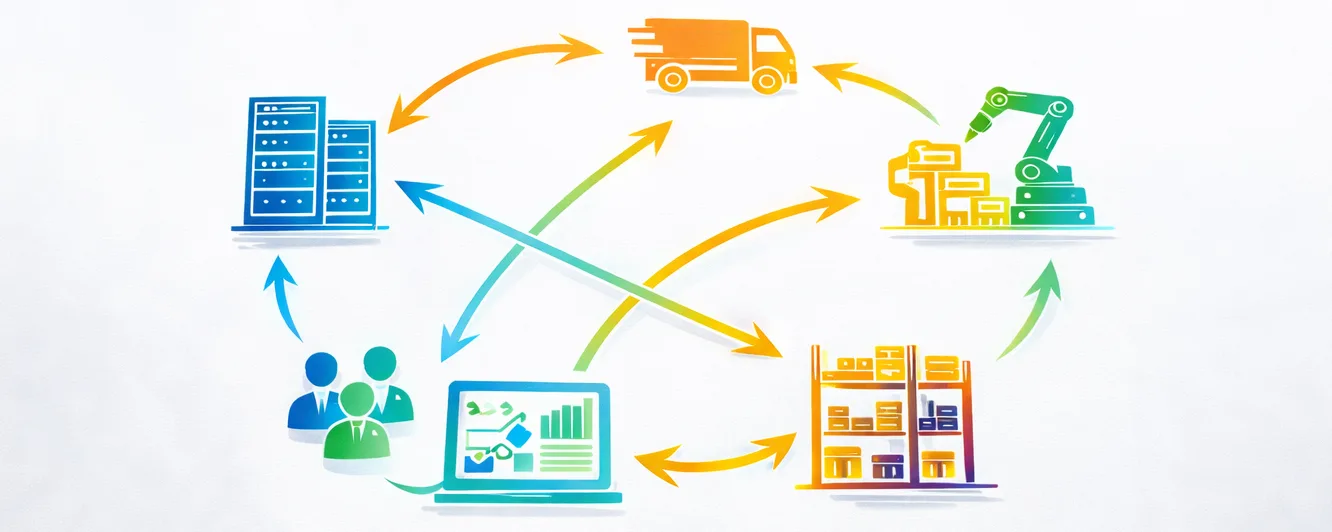
Every organisation contains a reservoir of underutilised resources. A resilient leader learns to pool, barter, and redeploy these resources across teams and departments to unlock value.
This is the core of the capital-light growth model: not more money, but smarter utilisation of what already exists.
Let us begin by identifying where these hidden resources lie and how leaders can systematically unlock them to strengthen organisational resilience and sustain growth.
The Philosophy of Ghost Assets
Ghost assets are resources the organisation has already paid for, or continues to pay for, but which remain underutilised. They exist within the system, quietly consuming cost without delivering their full potential value.
A few common examples include:
- A server running at 40% capacity
- A consultant on a monthly retainer with five free days every month
- Unused CRM user licenses
From a resilience perspective, these are latent organisational currency waiting to be deployed.
The Economic Waste
Beyond the balance sheet, ghost assets distort organisational culture. When resources remain unused, they encourage operational complacency; underutilisation gradually metastasises into a culture of waste.
A resilient organisation recognises that unused capacity is trapped capital.
The Barter Mindset
The challenge with ghost assets is that they cannot be discarded easily. This is where the barter mindset becomes essential.
Look closely, and you will often find one part of the organisation seeking approval to buy new assets, while another part is unsure how to utilise its spare capacity.
A resilience-driven leader reframes the conversation. Instead of asking, “What can we buy?” the question becomes:
“What do we already have that someone else can use?”
The moment this shift happens, idle capacity begins to move across teams through internal bartering and resource pooling, turning underutilised assets into drivers of growth without CAPEX.
Symmetric vs Asymmetric Exchange
In a resilience-driven organisation, internal barter can be structured in two ways.
1. Symmetric Trade
A symmetric trade occurs when two departments exchange one service for another.
For example, the customer service team experiences lean hours during the afternoon, and several agents remain idle. Their spare capacity is offered to the collections department to conduct follow-up calls on receivables.
In return, the Excel expert from the collections team helps the customer service team leader design and manage agent incentive schemes.
This creates a zero-outlay productivity gain. This is operational resilience in action.
2. Asymmetric Trade
An asymmetric trade occurs when teams exchange idle resources, spare capacity, or expertise that may have low value to one unit but high value to another. This creates disproportionate gains without new capital investment, unlocking growth from existing assets.
For example, the server hosting the customer service CRM operates with nearly 60% excess capacity. The finance team decides to host its accounting software on the same infrastructure.
Customer service benefits from lower server OPEX, while finance gains faster processing cycles and higher operational efficiency. The value extracted from the same asset increases significantly.
The Multiplier Effect
When barter and resource pooling are deployed strategically across the organisation, they create a powerful multiplier effect on ROI.
Through symmetric trade, teams remove operational irritants, improve efficiency, and build a culture of cross-functional collaboration.
Through asymmetric trade, the value of idle assets expands dramatically. What once served a single function now delivers multiple layers of organisational value.
This is the essence of resilience-led growth. Instead of chasing new capital, leaders unlock hidden capacity within the enterprise and convert it into a sustainable growth engine.
Resilience as a Competitive Moat
Organisations that embed barter and resource pooling into their operating culture display far greater resilience during credit crunches, liquidity shocks, and hyperinflationary cycles than firms that rely solely on cash.
The reason is simple. When expansion opportunities arise, these organisations first look within the enterprise for deployable capacity.
Idle machinery, underutilised human capital, or excess operational capacity are quickly mobilised through internal exchange mechanisms. Growth initiatives are therefore funded through existing resources, not new CAPEX commitments.
This internal resource mobility makes such organisations nimble, adaptive, and structurally competitive.
Market Agility
The most powerful advantage of a resilience-driven barter model is speed of execution.
Consider a typical big-ticket business initiative. The conventional path is predictable. Leaders prepare financial projections, approach banks or investors, and then navigate a long cycle of due diligence, risk assessments, expert reviews, and negotiations.
While this process unfolds, the market continues to move, and valuable time is lost.
Now contrast this with a barter-driven organisation.
Instead of waiting for external funding, leaders mobilise internal assets and cross-functional expertise. What might have taken months of financial approvals can often be activated through two or three decisive cross-functional decisions.
That speed creates strategic agility. And in volatile markets, agility is the purest form of resilience.
The Internal Resource Audit: Spotting Your Ghosts
To activate a barter-driven growth model, the first step is to identify the ghost assets present within the organisation. These assets typically appear in the following forms:
- Human Capital: Spare man-hours, niche expertise, or internal training modules.
- Technological Assets: Unused software seats, API access, or excess processing power.
- Physical Infrastructure: Idle machinery, warehouse space, or underutilised transport logistics.
- Financial Latency: Unutilised budget lines or dormant credit facilities.
The 3-Step Audit Framework
A structured internal resource audit helps leaders uncover idle capacity that can be redeployed to strengthen organisational resilience.
- Inventory: Catalogue every asset with <60% utilisation.
- Valuation: Assign a “Shadow Price” to these hours or units.
- Market Mapping: Identify which internal department is currently “buying” this exact service externally.
Once mapped, these resources can be redeployed to drive growth without additional CAPEX, strengthening the organisation’s resilience advantage.
Designing Your Resilience Architecture
A word of caution. Building a barter-driven resilience culture requires strategic design. A capital-light growth blueprint cannot be improvised. Leaders must structure it carefully to ensure value creation without weakening the organisation’s core strengths.
A few principles are worth keeping in mind.
Valuation Mapping
Even idle assets carry value.
For example, suppose your inbound customer service process maintains extra agents. This allows your team to answer calls with zero wait time, compared to the industry benchmark of ten seconds. Over time, this responsiveness becomes deeply associated with your brand promise.
If those agents are redeployed elsewhere, the service experience may change.
Therefore, before reallocating them, leaders must evaluate the value they will create in the new role and weigh it against the brand equity they currently protect.
The rule is simple. Price your idle capacity carefully without devaluing your brand.
Finding the Counterparty
For an internal barter system to function effectively, leaders must identify the right counterpart teams.
Look for complementary operators within the organisation. Teams that serve a similar audience but deliver a different layer of value.
For example, the QA team that audits agent-customer voice interactions cannot simply be redeployed to verify vendor invoices. The expertise, context, and operational logic are entirely different.
Successful barter depends on functional alignment and complementary capability.
The Reciprocal Loop
Sustainable resilience emerges when resource pooling and barter exchanges become continuous rather than transactional.
These arrangements must operate as reciprocal loops, not one-off trades. Both teams contribute, and both teams benefit.
Every exchange involves a learning curve. The real gains appear only when the collaboration repeats over time and evolves into a stable cross-functional partnership.
That is when idle capacity transforms into a long-term growth engine.
Case Studies in Resource Pooling
Across industries, resilient organisations consistently unlock growth by redeploying existing technology, talent, and capacity instead of relying solely on new CAPEX investments. The following examples show how barter, collaboration, and resource reuse convert idle assets into strategic advantage.
1. ISRO and the PSLV Advantage: Technological Asset Reuse

When launching the Mangalyaan mission, the Indian Space Research Organisation demonstrated remarkable resilience by leveraging the proven Polar Satellite Launch Vehicle instead of developing a new heavy-lift rocket from scratch. The PSLV had unused capability that could be repurposed for the mission with minor adaptations. By utilising an existing platform, ISRO avoided massive CAPEX, reduced risk, and accelerated timelines. This strategic reuse of existing technology turned idle launch capacity into a historic interplanetary achievement.
2. Toyota – Suzuki Cross Badging in India: Capacity Pooling

In India, Toyota Motor Corporation and Suzuki Motor Corporation demonstrated resilience through a strategic technology and product exchange. Instead of duplicating investments, the companies leveraged each other’s platforms through cross-badging. Models like the Toyota Glanza emerged from Suzuki’s Baleno platform, while Suzuki gained access to Toyota’s hybrid expertise. By pooling engineering capability, manufacturing capacity, and product platforms, both companies expanded their portfolios while minimising new CAPEX, turning collaboration into a competitive advantage.
3. Tata’s Nano Learnings and the Ace Mini Truck: R&D Latency

When Tata Motors developed the Tata Ace mini truck, it drew heavily from the frugal engineering philosophy refined during the development of the Tata Nano. Techniques in minimalistic manufacturing, cost optimisation, and modular design were repurposed across programmes. Instead of reinventing processes, Tata leveraged its existing engineering know-how and supplier ecosystem. This internal transfer of knowledge showcased organisational resilience, converting past R&D and operational learning into a scalable commercial vehicle success.
Risk Management & Governance
While barter and resource pooling strengthen organisational resilience, leaders must address a few governance considerations.
One potential challenge is tax compliance. When barter occurs between two different companies or two separate entities of the same company situated in different geographies and tax jurisdictions, assigning a fair value to the shared resource can become complex.
A valuation that is too low may invite regulatory scrutiny, while an inflated valuation may erode the economic advantage of the exchange.
Another risk is a potential drop in quality. When resources are temporarily redeployed, teams may treat the assignment as short-term and not demonstrate the same operational urgency.
This can be mitigated through clearly defined KPIs, performance accountability, and structured onboarding before deployment.
Performance Tracking
A common leadership question in a barter-driven operating model is straightforward: “How do we measure the ROI of bartered resources?”
The answer is rarely uniform. Each exchange has its own operational context, making a one-size-fits-all measurement framework impractical.
Leaders, therefore, need to design custom performance metrics that focus on value creation, efficiency gains, and productivity improvements. When tracked effectively, these metrics help reinforce the organisation’s resilience architecture and ensure that idle capacity continues to translate into measurable business outcomes.
Conclusion: The Resilience Advantage
The shift from CAPEX-heavy expansion to a capital-light blueprint is transformative. It compels leaders to look inward before knocking on the doors of banks and investors.
When implemented well, this approach creates an internal marketplace of resources where teams pool and barter resources to unlock value. The result is a business that is nimble, self-reliant, and far less dependent on external capital.
So the next time you consider a big-ticket investment, look at your balance sheet differently. Not for the cash you have, but for the value you are not using.
Chances are, exorcizing a few ghost assets may fund your next expansion.
If you found this perspective useful, consider subscribing to my blog by sharing your email below. You will receive regular insights on strategy, leadership, and building sustainable systems.
Stay Connected: For short-form thoughts and business storytelling, follow me on X and Facebook for regular updates.
Beyond the Blog: If stories of power, ambition, and passion interest you, explore my books on Amazon. They examine the fine line between success and surrender, and the choices that define both.
Leave a Reply