
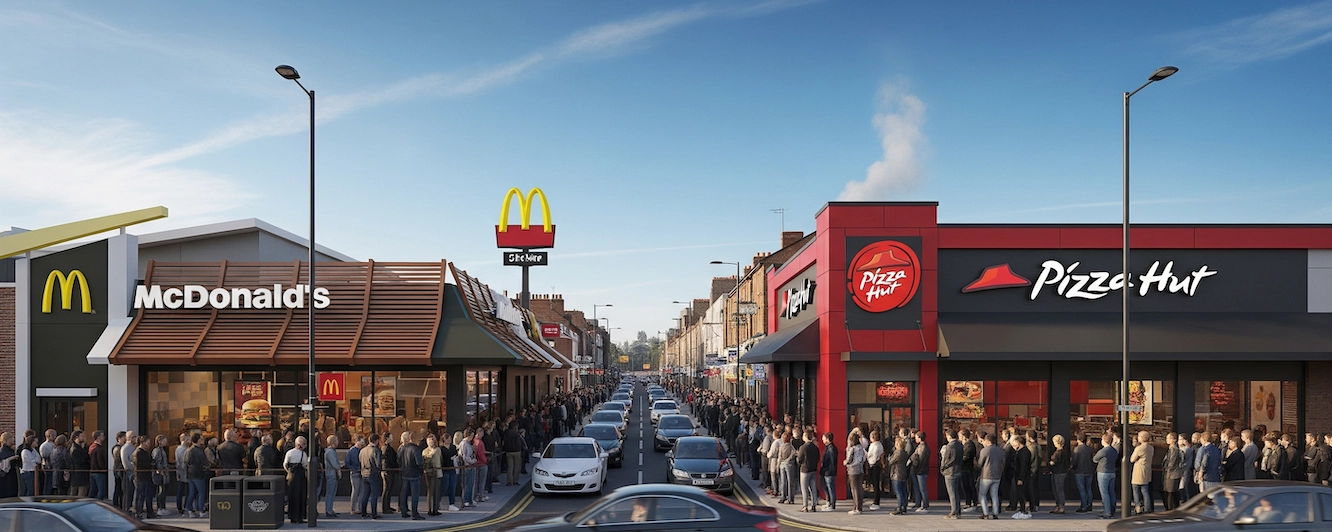
The fast-food industry is a lucrative business due to high demand and scalability. With the growing global population, urbanisation, and increasing disposable incomes, fast-food chains are thriving. The industry has low entry barriers and has a good potential for rapid expansion. Due to this, the fast-food industry has seen multiple rivalries between the players vying for the hearts, stomachs, and wallets of customers worldwide.
The battle between these two is one such story. What began as a local tiff ballooned into a global battle. A battle that was driven by innovation, strategic planning and marketing. This article explores this intriguing battle.
The Background
Founded in 1940 by Richard and Maurice McDonald in San Bernardino, California, McDonald’s today is the global fast-food icon. Ray Kroc, who joined the company in 1955, transformed what started as a drive-in restaurant into the fast-food behemoth that it is today. Quick service, consistent quality and affordable prices are the driving factors behind its success.


Pizza Hut, on the other hand, was founded in 1958 by the Carney brothers. They borrowed $600 and opened a small pizzeria in Wichita, Kansas. Pizza was a new concept in post-war America, but it quickly became popular. By the 1970s, It was the leading pizza chain in the US, and soon, it grew into a global phenomenon. Diverse offerings, innovative marketing campaigns, and family-friendly dining experiences are the factors that aided this growth.

How their Paths Cross?
Although both serve different types of food, their target audiences overlap significantly. Both aim to attract families, teenagers, and young adults who seek affordable, convenient, and flavourful meals. The two brands strategically position themselves to fit seamlessly into the fast-paced lifestyles of modern consumers. Whether it’s grabbing a quick burger on the move or enjoying a pizza night with friends at home, both companies cater to the demand for fast, satisfying food experiences.
Pizza Hut, initially a lunch and dinner destination, created a niche with its family-friendly dine-in experience. The iconic red-roofed buildings became symbols of comfort and familiarity, encouraging families to sit down and enjoy meals together. However, as McDonald’s began opening outlets near Pizza Hut locations and offering takeout-friendly menus, Pizza Hut had to adapt.
“McDonald’s is a people business, and that smile on that counter girl’s face when she takes your order is a vital part of our image.”
Ray Kroc
Strategies and Counterstrokes
The rivalry between them is strewn with countless incidents showcasing their relentless strategies to outdo each other. Below, I list a few notable ones:
1. The Breakfast Wars
McD introduced its breakfast menu in the 1970s. They introduced food items appealing to the people seeking a quick breakfast. Before this, breakfast was not a target segment. Items like the Egg McMuffin quickly became iconic. Pizza Hut, traditionally a lunch and dinner destination, experimented with breakfast offerings in some locations to compete. However, McDonald’s dominance in the breakfast segment remained largely unchallenged.
2. Pizza Vs Burgers
To encroach on Pizza Hut’s territory, McD introduced the McPizza in the 1980s. Pizza Hut saw this as a direct challenge and fought back by mocking McDonald’s attempt in advertisements. This move ultimately failed due to operational challenges like slower preparation times and customer resistance. The McPizza was quietly discontinued.
3. Super Bowl Commercial
During the Super Bowl of 1994. Pizza Hut aired a commercial featuring Donald Trump and his then-wife Ivana sharing a stuffed crust pizza. It was a direct attack on McD’s lack of innovation in pizza. The ad became iconic, helping Pizza Hut cement its reputation as an innovator in the pizza market.
4. Delivery Wars
Pizza Hut primarily focused on a dine-in experience, where families could sit and enjoy a meal. However, when McD began opening near Pizza Hut locations and offered takeout-friendly menus, it forced Pizza Hut to rethink its strategy. Pizza Hut started focusing on delivery services. Pizza Hut dominated delivery in the 1980s and 1990s.
McDonald’s hit back by entering the delivery game in the early 2000s, with the rollout of McDelivery. However, now, this factor has been mostly neutralised. With the advent of third-party delivery apps like Uber Eats, DoorDash, Zomato, Swiggy, etc., the playing field has been levelled.
5. The Indian Market
In India, in the early 2000s, they fiercely competed to capture the growing middle-class market. McD introduced the McAloo Tikki burger, a vegetarian delight tailored to Indian tastes. Pizza Hut countered by launching a range of pizzas with popular Indian toppings like paneer and tandoori chicken. This localisation proved highly effective, and both brands saw significant growth.
6. Health and Nutrition
In response to growing health consciousness among consumers, both have introduced healthier menu options. McD added salads, fruit, and grilled chicken sandwiches, while Pizza Hut offered whole-wheat crusts and low-calorie toppings. These initiatives reflect their efforts to adapt to evolving consumer preferences.
7. Community Engagement
Both have engaged in community outreach programs to enhance their brand image. McD established the Ronald McDonald House Charities to support families with hospitalised children, while Pizza Hut’s “Hut Heroes” initiative recognised employees who made significant contributions to their communities.
The Impact of Rivalry
The fierce but healthy competition has had a significant impact on their businesses. It forced both brands to continuously innovate, refine their menus, and enhance their customer experiences.
To stay ahead, McDonald’s has focused on digital transformation. They have introduced self-service kiosks and mobile ordering to streamline operations. Pizza Hut has also embraced technology, investing in online ordering platforms and delivery services.
Financially, the rivalry has driven both companies to expand aggressively. McDonald’s boasts over 38,000 locations worldwide, while Pizza Hut operates more than 18,000 restaurants in over 100 countries. The constant push for growth has resulted in higher revenues and market shares for both brands.
Impact on the Fast-Food Industry
The competition has set high standards for the fast-food industry and provided valuable lessons for other players. One key insight is the importance of menu localisation to cater to regional tastes. Additionally, their strategic placement of locations has influenced how new entrants select their sites. Another major impact has been on the adoption of food delivery services, paving the way for platforms like Swiggy, Zomato, Uber Eats, and DoorDash.
Furthermore, the rivalry has highlighted the crucial role of customer loyalty in driving business growth, inspiring various customer loyalty programs. Both companies have continuously innovated and refined their strategies, enhancing customer experiences and staying competitive. This fierce yet constructive competition has not only benefited the brands themselves but also raised the overall standards in the fast-food industry.
Lessons Learnt
- Adapt or Perish: The importance of evolving with market demands, whether it’s moving to delivery or localizing menus.
- Focus on Core Strengths: McDonald’s is unbeatable in speed and consistency, while Pizza Hut thrives on innovation in the pizza space. Knowing your strengths is crucial.
- Competition Breeds Innovation: The healthy competition forced both brands to think outside the box, benefiting customers with better products and services.
- Think Global Act Local: It is a cliched statement, but adapting to cultural nuances is key to winning markets, as seen in how both brands approached India.
The Battle Continues
As we look ahead, the rivalry continues unabated. Both continue to evolve, adapting to changing consumer preferences and technological advancements. McDonald’s is exploring plant-based menu items and sustainability initiatives, while Pizza Hut is experimenting with new pizza innovations and delivery solutions.
The competition will continue to shape the fast-food industry for years to come. Their relentless pursuit of excellence and market share serves as a testament to the power of innovation, strategy, and a deep understanding of consumer needs.
I am positive that you found this article informative and motivating!
Please subscribe to my blog by filling in your details below:
My blog has countless such articles and stories to guide you and quench your thirst for knowledge.
You can also follow me on X and Facebook to read more such stories and posts.
PS: Copilot and ChatGPT have been used to create parts of this post.
Leave a Reply