
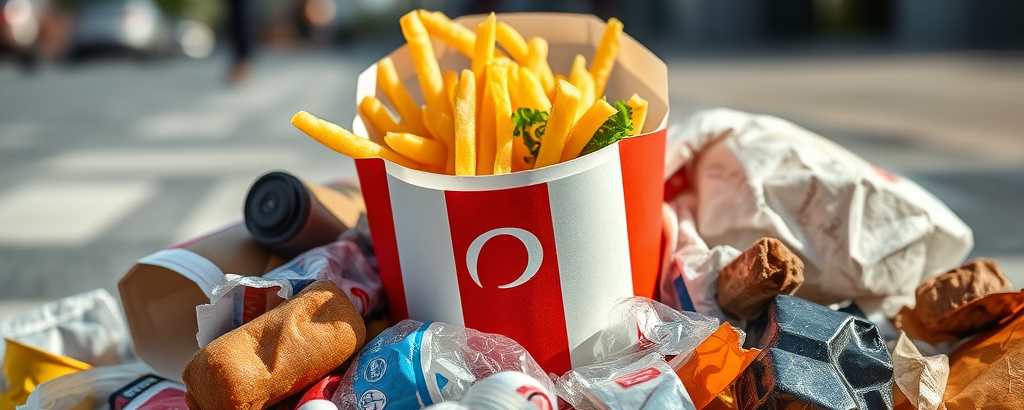
The global waste crisis is spiralling into one of the most pressing challenges of our time.
From overflowing landfills to oceans choked with plastic, the consequences stretch far beyond pollution, threatening ecosystems, economies, and human health. It’s time we rethink waste before it buries us. The fast food industry is a significant contributor to this waste.
Please read on to know more.
The fast food industry plays an essential role in our daily lives. It provides convenient and affordable meal options, ideal for the constantly on-the-go population. With urbanisation and fast-paced lifestyles dominating modern life, fast food offers immediate access to a diverse array of cuisines. It ultimately saves time and effort for consumers. This thriving industry supports individual convenience. It also drives global economic growth and generates jobs, and bolsters supply chains. Moreover, it fosters cultural connections, making a rich tapestry of global flavours accessible to everyone.
However, this convenience comes at a significant environmental cost. The fast food sector is a leading contributor to food waste and excessive garbage production. In this blog, we will examine how fast food contributes to waste. We will focus particularly on packaging, single-use plastics, and food waste. We will also explore what we can do to reduce its impact.
Role of The Fast Food Industry
Packaging
Fast food operations significantly rely on single-use packaging, including paper wrappers, plastic utensils, straws, and polystyrene containers. Globally, packaging from food establishments makes up a significant part of solid waste.
- In the United States, approximately 23% of landfill waste originates from containers and packaging. Much of this is stemming from food-related businesses.
- A single fast-food restaurant can produce up to 200,000 pounds of waste annually, the majority of which is disposable packaging.
- Every year, roughly 150 million tons of single-use plastics are discarded. Most of this comes from fast food chains that rely on straws, lids, and cutlery.
Food Wastage
The fast food industry also plays a pivotal role in the ongoing food waste crisis. Unsold food, oversized portions, and the prevalent “throwaway culture” in fast food establishments exacerbate this issue.
- In 2019 alone, the U.S. generated 66 million tons of food garbage from the food retail, service, and residential sectors. 60% of this ultimately ended up in landfills.
- Globally, households and food services waste around 931 million tons of food every year. Fast food has a significant share in this staggering statistic.
- In developing countries, inadequate garbage management infrastructure intensifies the problem. This leads to considerable environmental pollution. Greenhouse gas emissions also arise from decaying food.
“In a world of seven billion people, set to grow to nine billion by 2050, wasting food makes no sense. Economically, environmentally and ethically, aside from the cost implications, all the land, water, fertilisers and labour needed to grow that food is wasted. Not to mention the generation of greenhouse gas emissions produced by food decomposing on landfill and the transport of food that is ultimately thrown away.”
Achim Steiner, UNEP Executive Director
Indian Context
The Food Waste Index Report 2021 states that India generates roughly 68.7 million tons of food waste annually, with 11.9 million tons arising from the food service sector. This category includes fast-food restaurants, cafes, and other food establishments. Packaging materials, disposable utensils, and various single-use items exacerbate the situation.
The Central Pollution Control Board (CPCB) reports that plastic discards from food service sectors significantly contribute to the total plastic pollution in the country. This waste often winds up in landfills. It is also improperly disposed of, resulting in environmental contamination.
Overall Impact
The World Bank states that over two billion metric tons of municipal solid waste (MSW) are generated globally each year. Food comprises a major part of this total.
The UNEP Food Waste Index Report 2024 reveals that 1.05 billion tonnes of food was trashed globally in 2022. Of the available food, 19% was lost across retail, food service, and household levels.
The contribution of food waste extends far beyond overflowing landfills:
- Greenhouse Gas Emissions: Decomposing organic garbage produces methane, a potent greenhouse gas. Landfills contribute to 14% of global methane emissions, partially driven by discarded food.
- Microplastic Pollution: Plastic often breaks down into microplastics, contaminating soil and aquatic ecosystems. These pollutants are now pervasive in oceans, affecting marine life and even entering human food chains.
- Energy-Intensive: The production of fast food packaging is energy-intensive. The disposal process also consumes a lot of energy. These activities lead to significant resource depletion and carbon emissions.
Plastic poses a severe threat to marine ecosystems. It can take hundreds of years to decompose. It often finds its way into oceans and rivers. This pollution endangers wildlife and poses serious implications for human health, as contaminated water sources aid the spread of diseases.
How We Can Help
To tackle the problem spurred by the fast food industry, we need a multi-pronged approach. Here are actionable steps we can take as individuals:
- Eco-Friendly Alternatives: Whenever possible, opt for fast food outlets that prioritise sustainable packaging. Using reusable containers, cups, and cutlery can significantly reduce single-use consumption.
- Minimise Food Waste: Be conscious of portion sizes when placing your order. If leftovers are unavoidable, ensure they’re packed properly for later consumption rather than throwing them away.
- Segregate: Segregating recyclable waste from non-recyclable materials at disposal points helps ensure recyclable items are properly processed. Always utilise designated recycling bins for wet, dry, and recyclable waste.
- Spread Awareness: Share insights about the implications of fast food waste within your community. Consider children as potential ambassadors for sustainability. They can play a pivotal role in influencing others positively.
- Support Local Alternatives: Think about dining at local eateries that prioritise fresh ingredients and minimal packaging. These businesses frequently have a smaller environmental impact than large fast-food chains.
- Cook at Home: Preparing meals at home minimises packaging waste, enhances portion control, and reduces leftovers. Packing homemade lunches for work and school represents another practical means of waste reduction.
Conclusion
While fast food offers unmatched convenience, it brings a hidden cost: significant waste. From food waste to mountains of solid refuse, both severely harm our environment. Addressing this issue requires collective responsibility initiated by individual actions. We can significantly impact the environment.
We can do this by making small changes like opting for reusable containers, advocating sustainable practices, and promoting awareness. As mindful consumers, let’s take steps to encourage eco-friendly habits. Let’s aim to foster a cleaner and greener planet. This will drive the fast-food industry towards a sustainable future.
I am sure you found this article interesting and useful.
Please subscribe to my blog by filling in your details below:
My blog has countless such articles and stories to guide you and quench your thirst for knowledge.
You can also follow me on X and Facebook to read more such stories and posts.
You can also watch a video on this topic on my YouTube channel:
PS: Copilot and ChatGPT have been used to create parts of this post.
Leave a Reply