
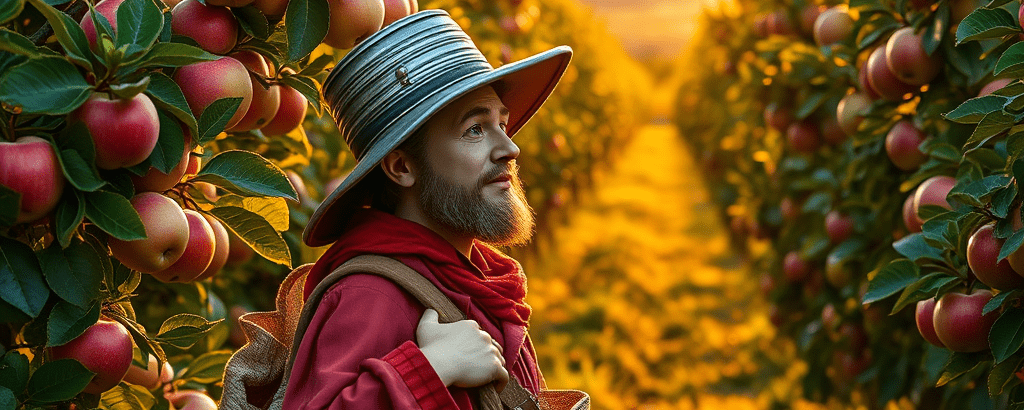
The adage, “An apple a day keeps the doctor away,” portrays the timeless appeal of apples, the world’s most popular fruit, cherished not only for their delicious taste but also for their remarkable health benefits. From crunchy Fuji and sweet Gala to tart Granny Smith and juicy Honeycrisp, every variety brings its unique flavour profile and culinary use. Whether enjoyed as a fresh snack, blended into juice, or baked into the classic pie, apples truly shine in various forms.
Origin of Apples
But where do these beloved fruits come from? The answer takes us on a fascinating journey to the leading apple-producing countries: China, Turkey, the United States, Poland, India, and Russia. China stands tall at the forefront of global apple production, contributing the most to the market. Apples trace their roots back to Central Asia, specifically the region of modern-day Kazakhstan, where they have been cultivated for thousands of years. As they made their way to Europe via the ancient Silk Road, they quickly became a staple fruit.
When early European settlers arrived in North America, they brought seeds with them, paving the way for a flourishing apple industry. Among the notable figures in the fruit’s history is Johnny Appleseed, a legendary figure who roamed the American frontier in the 19th century, promoting apple cultivation wherever he went. His legacy has left a lasting mark on American agriculture, leading to the creation of resilient apple varieties that are loved to this day.
Johnny Appleaseed
Born as John Chapman on September 26, 1774, in Leominster, Massachusetts, Johnny was the second of eleven children. His fondness for nature was evident from a young age; he effortlessly understood plants and animals, often volunteering to help his mother in their small garden. However, after his mother’s passing and with his father’s remarriage, the family relocated to Longmeadow, Massachusetts, where his skills in farming truly began to flourish.
Apples played a vital role in settlers’ lives as they were essential for producing cider, vinegar, and other preserved goods. Cultivating apple orchards amidst the wild landscape was challenging, demanding patience, knowledge, and unwavering dedication. A few qualities that John Chapman possessed in abundance. In the early 1800s, Johnny embarked on a mission to plant them across America. He envisioned that these trees would provide sustenance and stability for the settlers.
A Man On A Mission
Clad simply in a tin pot for a hat and equipped with a bag of seeds from cider mills in Pennsylvania, Johnny Appleseed set forth on his grand adventure. The discarded seeds, typically thrown away after the pressing process, were gathered with care by Johnny, along with dreams of creating orchards that would nourish generations.
Johnny’s faced the relentless forces of nature, unpredictable weather, illnesses, and the dangers posed by wild animals. Yet, unwavering in his mission, he displayed remarkable resourcefulness. His reputation as a gentle, kind man often shielded him from harm. One memorable winter caught unprepared by a sudden snowstorm, Johnny took refuge in a hollow log, surviving on wild fruits and berries he had foraged earlier.
A Folk Hero
Despite challenges, Johnny Appleseed’s orchards thrived. The settlers embraced the trees he planted, nurturing them as they bore fruit. In some regions, Johnny’s orchards marked the very first signs of civilisation, offering much-needed comfort and stability to newcomers in a harsh, unfamiliar land. By the 1830s, Johnny had become somewhat of a folk hero, wandering across Ohio, Indiana, and Illinois, where his orchards became a common sight.
With the trees flourishing under the care of new settlers, Johnny found joy in his mission, viewing himself as a servant to both nature and God. Stories of his kindness and dedication spread like wildfire across the United States. In 1845, after a life dedicated to wandering and nurturing the earth, Johnny Appleseed passed away near Fort Wayne.
Today, thanks to the efforts of the barefoot man who planted orchards throughout the wilderness, the apple trade in the United States is thriving. The estimated production for the 2024-2025 crop year is a staggering 260 million bushels, generating over $23 billion in economic activity. This booming trade supports 150,000 jobs across the nation, maintaining apples as a symbol of American agricultural innovation and cultural heritage. Truly a sweet legacy worthy of celebration!
I am sure you found this story interesting.
Please subscribe to my blog by filling in your details below:
My blog has countless such articles and stories to guide you and quench your thirst for knowledge.
You can also follow me on X and Facebook to read more such stories and posts.
PS: Copilot and ChatGPT have been used to create parts of this post.
Leave a Reply