
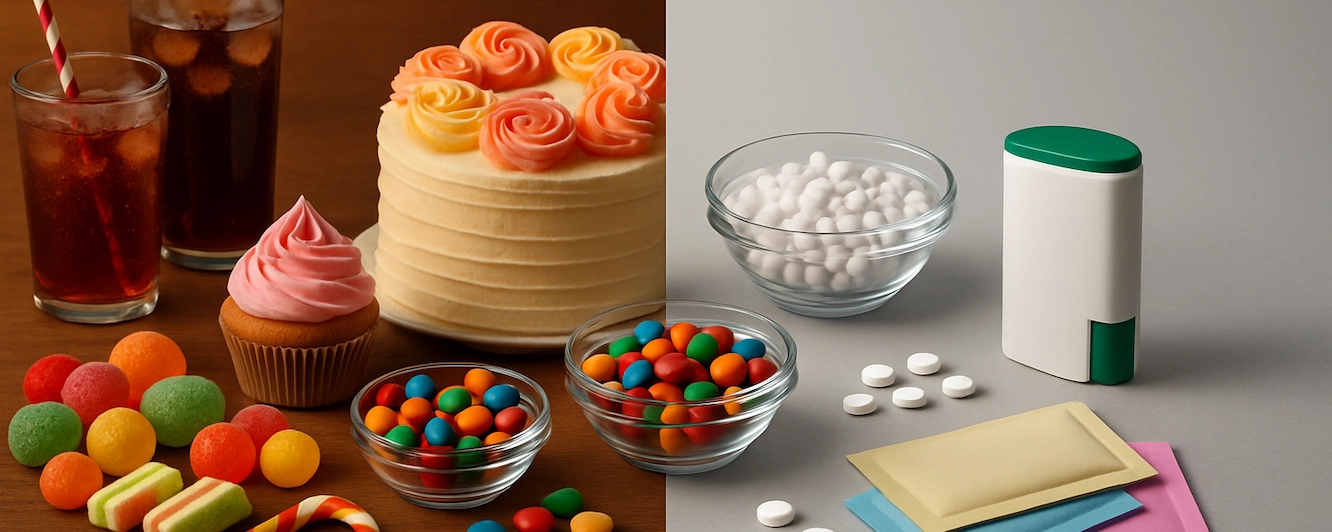
Artificial sweeteners have quietly reshaped the way we consume sugar without us even noticing. From fizzy diet colas to that tiny pill in our morning tea, artificial sweeteners have become part of our everyday routine.
Artificial sweeteners promise a world where you can indulge in sweet treats guilt-free. No sugar spikes, no extra calories, just pure, unadulterated sweetness. With rising concerns about obesity, diabetes, and overall health, artificial sweeteners have gained momentum.
The human relationship with sweetness is complex. It’s more than just a taste. It’s an emotional connection. A bite of cake after a long day, a warm cup of tea on a winter morning, or childhood memories of candy, sweetness is comforting and nostalgic.
But there’s a catch. While sugar makes life delicious, its excessive consumption carries risks. So, are artificial sweeteners the ultimate solution? Do they offer the best of both worlds? Or is there a hidden downside?
Let’s dive deep into the world of artificial sweeteners and find out.
Why We Love Sugar So Much?
Sweetness is one of our first and most pleasurable tastes. As children, it came from the syrup drizzled over pancakes or the reward of candy for good behaviour. As adults, it lingers in the comforting cup of tea, or the cake shared during a celebration. Sugar isn’t just an ingredient. It’s a feeling, a symbol, and in many ways, a cultural cornerstone.

Historically, sugar was a luxury item. Ancient civilizations valued it highly, with early records showing its use in medicine and religious offerings. Over time, sugar became more accessible, making its way into almost every household. Today, it’s impossible to imagine a world without it.
From the Indian Gulab Jamuns to Italian tiramisu, sugar has been central to global cuisine. But beyond its emotional role, sugar is also a workhorse in the kitchen. It adds volume and texture in baking, aids in fermentation, and preserves fruits as jams and jellies. It’s versatile, delicious and for many decades, completely unchallenged.
The Bitter Truth
As our lifestyles have grown increasingly sedentary and processed foods have become a staple in modern diets, excessive sugar consumption has followed suit. What was once an occasional treat has turned into a daily indulgence. Quietly tucked into sauces, dressings, breads, cereals, and even seemingly healthy foods.
“You don’t necessarily know you’re consuming sugar when you’re using store-bought salad dressing, or store-bought tomato sauce, or healthy granola bars. It’s added to all these foods.”
Laurie David
While sugar certainly adds pleasure to our meals, overconsumption carries serious consequences. From obesity and diabetes to tooth decay and metabolic disorders, the list of health risks is long. What makes sugar especially problematic is its addictive nature. It triggers cravings, often leading to unintentional and habitual overconsumption.
One of sugar’s most pressing health concerns lies in how rapidly it’s absorbed by the body. This causes sharp spikes in blood glucose levels, which over time strain the pancreas and increase the likelihood of developing type 2 diabetes. Additionally, unused sugar is stored as fat, contributing directly to weight gain. Many people struggling with obesity are unaware of how much sugar they consume daily, especially through processed foods and sweetened beverages.

Even items marketed as healthy as fruit juices or flavoured yoghurts, often contain added sugars that quietly undermine weight management efforts. Beyond physical health, sugar also affects the mind. Studies have linked excessive sugar intake to mood swings and even worsened symptoms of depression.
Need For A Sweet Alternative
As the world was getting sweeter, our bodies were paying the price. Doctors, scientists, and nutritionists began sounding alarms. But cutting sugar out completely was not just difficult, it felt like a punishment. People craved the taste but didn’t want the consequences.
This thought paved the path for the creation of artificial sweeteners. Substances that mimic the taste of sugar without its harmful effects. Usually, these are low, or zero-calorie substitutes designed to provide sweetness without spiking blood sugar levels.
For people with diabetes, artificial sweeteners offer a way to enjoy sweet foods without endangering their health. Similarly, individuals aiming for weight loss prefer sugar substitutes to cut unnecessary calories.
Artificial sweeteners also serve practical purposes beyond health. Many have higher sweetness intensity than sugar. In other words, only a tiny quantity of the artificial sweetener is needed for the same effect. This makes them cost-effective for large-scale food production.
Artificial Sweetener: An Accidental Invention
Like many great scientific breakthroughs, the discovery of the first artificial sweetener was a happy accident. The kind of twist you might find in a novel rather than a lab manual. It was 1879, and Constantin Fahlberg, a chemist at Johns Hopkins University, was deep into his research on coal tar derivatives. After a long day in the lab, Fahlberg headed home, weary and hungry, and sat down for dinner.

In his haste, he forgot to wash his hands. As he tore into his bread, something strange caught his attention, it tasted unusually sweet, almost like sugar had been sprinkled on it. Surprised, he retraced his steps and realised he had unknowingly carried a chemical compound from the lab to his dinner table. That compound was saccharin, and it was hundreds of times sweeter than regular sugar.
Fahlberg had stumbled onto something remarkable. This single moment gave birth to what would become a multi-billion-dollar industry. Saccharin went on to gain popularity during sugar shortages in both World War I and World War II, serving as a valuable substitute when real sugar was scarce.
Over the following decades, scientists and food technologists developed a whole suite of artificial sweeteners, each with its own flavour profile, intensity, and loyal followers.
Popular Artificial Sweeteners
Today, there’s a whole family of artificial sweeteners on the market, each offering a unique blend of sweetness and functionality.
Saccharin: The original, is still in use. It’s about 300 to 400 times sweeter than sugar, and while early controversies questioned its safety, decades of research have cleared its name.
Aspartame: Found in many diet sodas and sugar-free gums. It’s around 200 times sweeter than sugar, with a taste profile close to the real thing.
Sucralose: It’s about 600 times sweeter than sugar and can be used in cooking, making it a favourite in both homes and food factories.
Acesulfame K: It is also known as Ace-K. It masks bitter aftertaste and works well in soft drinks, desserts, and baked goods due to its long shelf life.
Stevia: It is a natural option, extracted from the leaves of the stevia plant. It offers 200–300 times the sweetness of sugar and is often marketed as the healthier, ‘green’ alternative.
Sweetness Without the Sacrifice
The appeal of artificial sweeteners is easy to understand. They offer a way to enjoy sweet flavours without the calories. For someone trying to lose weight or manage blood sugar levels, this can make a meaningful difference. They also don’t feed the bacteria that cause cavities, making them tooth-friendly a quiet win for dentists everywhere.
In the world of food production, they offer stability. Some, like sucralose, don’t break down under heat, allowing them to be used in baking. Others maintain their flavour over long shelf lives, making them ideal for packaged goods.
For diabetics, artificial sweeteners have been a game-changer. They allow patients to enjoy desserts, drinks, and even Indian sweets to be enjoyed without guilt or glucose spikes.
Health Industry: A Natural Partner
It didn’t take long for the health and wellness industry to embrace artificial sweeteners. Nutrition bars, weight-loss shakes, diabetic-friendly cookies, the shelves quickly filled with sugar-free options that still tasted indulgent.
Even pharmacies began stocking more than just medicine. Sugar-free toffees, low-carb protein mixes, and stevia drops found space alongside multivitamins. Gyms began selling pre-workout drinks sweetened with sucralose or stevia. It was a market trend that was hard to ignore. Health with a side of sweetness.
Contribution To The Junk Food Juggernaut
Artificial sweeteners weren’t confined to healthy foods. They found equal popularity in the junk food industry.
The introduction of diet sodas marked a massive shift. Suddenly, one could drink a whole can of cola with zero calories. Ice creams, candies, and even syrups began sporting ‘sugar-free’ and ‘zero, labels, appealing to those trying to indulge responsibly.
Fast food chains offered light drinks and low-calorie desserts. ‘Guilt-free’ snacks became a thing. Yet the irony remained: while the sweetener removed some of the calorie burden, many of these foods still lacked nutritional value. It was health-washing in a shiny, sugar-free wrapper.
Are Artificial Sweeteners Really Safe?
Are artificial sweeteners safe? It’s a question that has stirred debates for decades. The short answer: yes, when consumed within recommended limits, most global food safety authorities deem them safe. But like many things in nutrition, the story isn’t entirely black and white.
Some recent studies explore their impact on gut microbiota, the community of bacteria that plays a crucial role in digestion and overall health. Others question whether sweeteners cause metabolic confusion, where the body expects calories after tasting sweetness but doesn’t get them, possibly affecting hunger signals.
The once-feared link between sweeteners like saccharin or aspartame and cancer has been thoroughly investigated and largely debunked. Still, some people report mild side effects like headaches or digestive issues, especially if they’re sensitive to additives.
The bottom line? Artificial sweeteners are generally safe as long as they’re used in moderation. While they are a helpful tool in reducing sugar intake, they must not be considered as a free pass to overindulge.
Do Artificial Sweeteners Promote Overeating
Some researchers argue that artificial sweeteners might increase cravings. Because they deliver sweetness without calories, the body may respond by signalling for more food to compensate.
“Artificial sweeteners may trigger cravings for other sweet foods. When your body is not fed nutrients, it asks again and again for more food, triggering heavy-duty cravings for fattening, sugary foods.”
Suzanne Somers
There’s also a psychological element. Someone who drinks a diet soda may feel they’ve ‘earned’ that extra slice of pizza. This compensation effect can undermine the very health goals that led to the use of sweeteners in the first place.
So, while sweeteners don’t contain calories, their presence in our diet may influence our food consumption patterns. It’s a subtle but important dynamic to understand.
The Good, The Bad, and The Ugly of Artificial Sweeteners
Every innovation has its pros and cons. And artificial sweeteners are no different. Let’s delve into this aspect:
The Good
- Helps reduce sugar intake
- Supports diabetes and weight management
- Preserves food taste and shelf life
The Bad
- Possible interference with gut microbiota
- May trigger overconsumption behaviours
- Often found in processed foods with little nutritional value
The Ugly
- Used in ‘diet’ marketing to hide unhealthy ingredients
- Polarised debates confuse consumers
- Unintended metabolic impacts still under investigation
Conclusion
Artificial sweeteners are a marvel of modern food science, delivering the joy of sweetness without the baggage of calories, blood sugar spikes, or dental concerns. They’ve created new possibilities for millions striving to eat smarter, live healthier, and still savour life’s small indulgences.
Like all innovations, they come with both benefits and caveats. Used wisely, artificial sweeteners can be powerful allies in managing sugar intake. But when overused or relied upon without thought, they may lead to less mindful eating habits. The goal isn’t to replace sugar entirely but to approach sweetness with awareness.
So yes, enjoy that sugar-free dessert. Relish the convenience and comfort it brings. Just remember, true sweetness lies in the balance of conscious choices, thoughtful consumption, and the healthy relationship we build with what’s on our plate.
I am positive that you found this article informative and useful!
Please subscribe to my blog by filling in your details below:
My blog has countless such articles and stories to guide you and quench your thirst for knowledge.
You can also follow me on X and Facebook to read more such stories and posts. PS: Copilot and ChatGPT have been used to create parts of this post.
Leave a Reply