
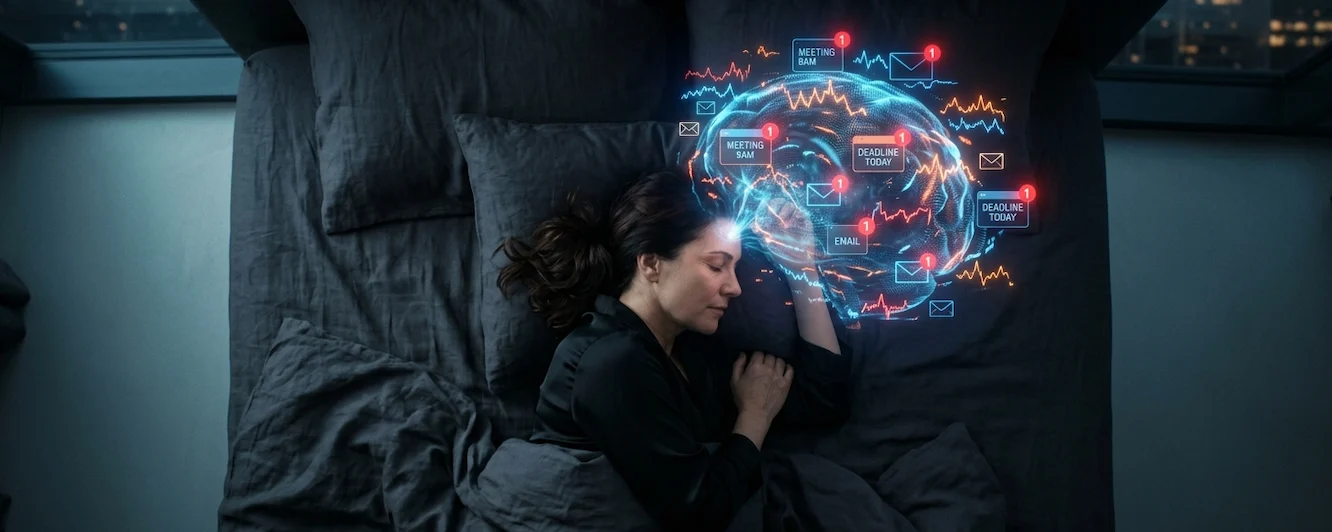
THE 50-WORD SUMMARY: Reclaim your executive function by conducting a dopamine audit. This guide reveals how digital habit loops like endless scrolling and constant notifications hijack your brain’s reward system. Learn to prune these distractions, reset your neurochemical baseline, and restore the deep focus required for high-impact professional and creative output.
I was on a flight once, somewhere between take-off and landing, when I noticed my co-passenger. Head down. Screen on. Scroll. Tap. Swipe. Repeat. Emails. Messages. Notifications. More emails.
Two hours of altitude, yet zero presence.
That is the dopamine trap.
We are no longer bored. We are no longer present. We are continuously engaged, but rarely aware. Our focus is fragmented. Our attention span is quietly eroding.
And the scariest part? It doesn’t feel like a trap. It feels like we are in control.
Before we get into the mechanics of the dopamine trap, let me start with a simple success story.
A No-Phone Year: How Ed Sheeran Broke the Dopamine Trap
In 2015, Ed Sheeran was at the peak of global pop stardom, yet he was drowning in a digital sea. He found himself seeing the world through a five-inch glass screen instead of his own eyes. The man who could command a stadium of 80,000 people felt a constant tug in his pocket, a quiet but persistent pull of a dopamine trap running unchecked.
His executive function was under strain. He was responding to thousands of emails, texts, and notifications, leaving no mental space for the “boredom” that once sparked his best ideas. His brain had been trained to chase the quick hit of dopamine rather than the slow build of meaningful creation.
The Highland Blackout and the Neurochemical Reset
He did not opt for a short break. He chose a complete digital shutdown that lasted an entire year, a deliberate reset of his dopamine-driven habits. Sheeran got rid of his smartphone and iPad, switched to a basic phone for emergencies, and stepped away to travel.
The withdrawal was real. He later spoke about the discomfort of not being reachable and the instinct to capture every moment for social validation. But as the noise faded, something shifted. The constant pull of notifications weakened. His focus returned, sharper and deeper.
In that silence, his creativity expanded. He was no longer reacting. He was creating. The result was Divide, an album that broke records and reinforced his place at the top.
What matters is that he did not treat this as a one-off detox. He recognised that constant digital dopamine is a silent drain on focus and creative thinking. He continued to live with limited technology, adopting what can be called a “low-tech discipline”.
Key Takeaway: The problem is not your phone. The problem is unregulated dopamine exposure. Fix that, and you reclaim your focus, your clarity, and your ability to produce work that matters.
The Mechanics of the Dopamine Drain
Dopamine is a neurochemical reward signal released not when we achieve something meaningful, but when the brain anticipates a reward. It nudges us towards action, like a subtle internal “well done”.
It fuels motivation and drive. As we work towards a goal, small signs of progress trigger dopamine, keeping us engaged over time.
Dopamine itself is not the problem. The issue begins when it turns into a loop that drains focus and weakens executive function.
When you hear a notification or see a message preview, dopamine rises. The brain is not rewarding you yet; it is pushing you to act. When you engage and find something interesting, dopamine continues to flow and reinforces that behaviour.
The risk lies in uncertainty. The brain releases more dopamine for unpredictable rewards, which is why emails, messages, and social feeds are so compelling.
Over time, this creates a loop.
Check. Scroll. Small reward. Repeat.
Without noticing, your attention fragments, your focus declines, and your day fills with activity that feels productive but achieves very little.
How Dopamine Trap Quietly Damages Output?
Once you are caught in the dopamine trap, it affects you in two critical ways.
1. Low Productivity from Constant Task-Switching
The brain works like a flywheel. Every time you switch tasks, it needs time to disengage from the previous one and refocus on the next. This delay is known as the switching cost, and each switch drains cognitive energy.
Research from the University of California, Irvine shows it takes an average of 23 minutes and 15 seconds to return to deep focus after an interruption.

That means every time you jump from one task to something unrelated, you silently lose twenty-three valuable minutes. Multiply that across a day, and it becomes clear why you feel busy but achieve very little. The workday fills up, but meaningful output does not.
If you want to explore this further, read my blog – Reclaiming Your Focus: How to Cut the Context Switching Tax
2. Loss of Interest in Routine Work
The brain operates with a resting level of dopamine, known as the dopamine baseline. This baseline defines how motivated, focused, and satisfied you feel during everyday work.
When you repeatedly trigger spikes through notifications, scrolling, and constant digital inputs, the brain adjusts by raising this baseline. As a result, simple and necessary tasks begin to feel dull. Your attention span weakens, and you start craving higher stimulation just to stay engaged.
This is where the real damage shows.
Most of our work, often close to 80% of our to-do list, consists of routine but essential tasks. When your dopamine baseline is elevated, these tasks feel uninteresting and heavy.
Over time, this leads to boredom, declining work quality, and low job satisfaction. You are working, but without depth, consistency, or fulfilment.
The Dopamine Audit Framework
I now propose a three-step guide that will help you prune your digital habits and restore your mental clarity.
1. Identify the Triggers
The Trigger Apps
We often measure digital exposure by total screen time, but that only gives a number. It never tells the real story. It is like saying you consumed three litres of fluid today. What matters more is what made up those three litres. How much was water, how much was sugar, how much was caffeine?
For a proper dopamine audit, you need to look beyond hours and identify which apps are triggering your behaviour. Because digital consumption does not begin with the screen. It begins the moment you feel the urge to pick up the device.
Picture yourself at a family outing. You are fully present, enjoying the moment. Now ask yourself this. Which notification would still make you reach for your phone?
That is your trigger app.
The Boredom Reflex
At times, digital consumption is not driven by urgency but by absence. Nothing to do, nowhere to focus, and the brain seeks a quick dopamine lift.
A meeting gets delayed, and you start scrolling. You are waiting for the lift, and your hand moves to your pocket without thinking. You are at a table, waiting for food, and the pull of your social feed feels irresistible.
Boredom has quietly become a reflex for dopamine-seeking behaviour.
What makes this worse is that the digital world is designed to reward that reflex. You open one app, and habit takes over. Your fingers move before your mind catches up.
Map your Digital Drain
Based on these observations, list down your digital habits that consume disproportionate time, add to your decision debt, or leave you mentally drained by the end of the day.
This is your dopamine map.
Once you see it clearly, you can start pruning what does not serve your focus, your energy, and your ability to do meaningful work.
2. The Digital Prune
The Notification Reset
Think about it.
Do you really need to respond the moment your phone pings? What is the worst that can happen if you respond later, at a time of your choosing? Not long ago, before the last 25 years of always-on alerts, people still performed and delivered without constant interruptions.
Muting notifications is the simplest way to cut dopamine triggers. Most smartphones offer a Do Not Disturb mode. Use it deliberately. Schedule fixed slots to catch up, for example, 15 minutes every two hours.
And keep that boundary firm. Do not let a 15-minute check turn into an hour of drifting.
Greyscale Transition
Another effective method is to make the digital experience less stimulating.
Switch your screen to greyscale. Add passcodes to your trigger apps instead of relying on face or fingerprint unlock. The goal is simple. Make access slower and less rewarding.
When the visual appeal drops and friction increases, the dopamine response weakens. What once felt irresistible starts to feel ordinary.
Redesign Your Environment
Your environment should signal intent.
If you want to reduce digital consumption, make it visible in how you set up your space. Define tech-free zones, such as the dining table or bedroom. Block out no-screen time in your calendar.
Keep devices slightly out of reach. Replace them with something intentional. A book on your bedside table. A notebook on your desk.
The idea is not restricted. It is a substitution.
When the environment changes, behaviour follows. And when behaviour changes, your dependence on constant dopamine hits begins to fade.
3. The Restoration
Once you reduce digital consumption, a gap appears. You suddenly have spare time and no clear use for it. Your elevated dopamine baseline is no longer being fed, so the brain defaults to boredom. This is the critical moment. Without a deliberate system, you slip back into old habits.
- Build Replacement Habits: To reset your dopamine baseline, you need habits that reward effort, not impulse. The idea is simple. Earn your leisure. Activities like reading, puzzles, treasure hunts, DIY projects, or crafts such as pottery and sculpting work well. They engage your mind, rebuild focus, and provide a slower, more stable dopamine release. This is how you retrain a hijacked reward system.
- The Weekly Reset: Short breaks are not enough. You need a visible reset. Set aside one day each week as an Analogue Sunday. A full 24-hour window with minimal or no devices. This signals a clear behavioural shift and prevents old dopamine-driven habits from creeping back in. Over time, this becomes your anchor.
- Communicate Proactively: New habits need social alignment. Inform your colleagues and family about your digital boundaries and availability windows. When expectations are clear, interruptions reduce. Your tech-free time becomes protected, not negotiated. This is what makes the change sustainable.
Key Takeaway: Managing dopamine is not about cutting off technology. It is about building a system where your focus, time, and energy are used with clear intent.
A Quick Start Guide to Dopamine Reset
If you are not ready for a full-scale dopamine audit and reset just yet, do not worry. You can still begin with small, practical changes.
Below is a quick substitution guide to get you moving.

The idea is simple. Replace high-dopamine digital habits with activities that are slower, more intentional, and less dependent on constant stimulation.
Start small. Pick one or two habits and replace them consistently.
Reclaim Your Dopamine, Reclaim Your Day
The problem is not your phone. It is the silent drift of dopamine-driven habits that chip away at your focus, fragment your attention, and drain your executive function.
The good news is, this is not permanent. With a simple dopamine audit, mindful pruning of notifications and scrolling, and a few intentional replacements, you can take back control. You do not need extreme changes. You need consistent ones.
Because in the end, managing dopamine is about designing your day, not reacting to it.
Start small. Pick one habit. Change it today.
And if you are serious about reclaiming your focus, begin your full dopamine audit now.
If you found this perspective useful, consider subscribing to my blog by sharing your email below. You will receive regular insights on strategy, leadership, and building sustainable systems.
Stay Connected: For short-form thoughts and business storytelling, follow me on X and Facebook for regular updates.
Beyond the Blog: If stories of power, ambition, and passion interest you, explore my books on Amazon. They examine the fine line between success and surrender, and the choices that define both.


Leave a Reply