

“If you don’t produce, you won’t thrive, no matter how talented you are.”
This quote on productivity from Cal Newport’s ‘Deep Work’ has echoed in boardrooms, hustle-culture podcasts, and self-help seminars alike.
Today, we measure our worth by what we accomplish. Productivity has become the modern badge of honour. A tool embraced by leaders, entrepreneurs, and professionals alike. Efficiency is celebrated. Output is king. But what happens when the very thing designed to empower us becomes a burden? When productivity stops serving us and starts controlling us?
Welcome to the paradox of modern ambition: we’re more productive than ever yet more burned out, distracted, and disconnected.
Productivity today isn’t just a practice, it’s a mindset, a lifestyle and even a belief system. It gives us structure, helps us reach goals and fuels our achievements. But when it turns into an obsession, it can blur the line between progress and pressure. We begin to feel guilty for resting, uneasy during downtime, and anxious when we’re not ticking boxes. Even joy becomes suspect if it’s not ‘useful’.
What started as a tool to enhance life has begun to define it.
This article explores that shift. How productivity evolved from a means of achieving success into a measure of self-worth. Why do leaders still swear by it? How it can quietly trap us. And most importantly, what we can do to take it back.
Why Productivity Is in the Focus
Across industries, leaders emphasise productivity as the driving force behind economic growth, innovation, and a competitive edge. From corporate giants to solo ventures, the ability to turn ideas into outcomes efficiently is what separates momentum from stagnation.
Productivity metrics’ shape everything. From hiring strategies to investment decisions. In today’s work culture, success often hinges on how much gets done and how quickly. Teams are pushed to streamline workflows, adopt automation, and eliminate inefficiencies.
This drive for output extends far beyond office walls. Engineers build apps and algorithms to help users get more done. Doctors strive for faster, more effective patient care. Governments base economic policies on productivity growth. No matter the field, the race is on to achieve more with less.
Whether we’re leading a Fortune 500 company, scaling a startup, or running a freelance practice, our performance is measured by outcomes and speed. In a world of constant change, intense competition, and rising expectations, productivity often feels like the golden ticket. It promises:
- Higher output with fewer resources
- Leaner teams and faster cycles
- Better returns for shareholders
- Career advancement and recognition
We strive to build productivity-focused cultures, lead productive meetings, and empower productive teams. While productivity is critical for growth and survival, it can become problematic when pursued without balance, clarity, or context.
How Quest for Productivity Makes Us Its Prisoner
The pressure to perform, optimise, and squeeze value from every moment can quietly lead to burnout, stress, and a lingering sense of dissatisfaction.
When we begin tying our self-worth to our accomplishments, work inevitably spills into our personal lives. The lines blur. Time for reflection, relaxation, and creativity disappears. What started as a healthy ambition to be productive turns into a relentless cycle of overworking.
Our calendars are colour-coded but overflowing. To-do lists grow faster than we can check them off. And ‘work-life balance’ often feels more like a hashtag than a lived experience.
“Don’t confuse activity with productivity. Many people are simply busy being busy.”
Robin Sharma
Somewhere along the way, we stopped using productivity as a tool and started worshipping it as a goal. In doing so, we’ve built a prison of our own making.
This obsession shows up in everyday patterns:
- Always-on Culture: Being reachable 24/7 becomes something to be proud of.
- Hustle Guilt: Rest feels like weakness. Downtime feels wasteful.
- Compulsive Measuring: If it’s not tracked, it doesn’t count.
- FOMO: Every unoptimized minute feels like a missed opportunity.
The result? We’re working more, but living less. And the most troubling part, we’re celebrating it.
Productivity and Effectiveness Are Not Same
Here’s the truth no one puts on LinkedIn: You can be extremely productive and still fail.
Productivity is about output, but effectiveness is about impact. Doing more does not always mean doing better. If a task does not contribute to meaningful results, then it’s just busy work.
Effectiveness is about doing the right things.
We spend hours on repetitive tasks, attending meetings that could have been emails, or responding to notifications that add little value. True effectiveness is about focusing on activities that move the needle, eliminate distractions, and create lasting change.
“There is nothing so useless as doing efficiently that which should not be done at all.”
Peter Drucker
This confusion between being busy and being impactful is what traps many high performers. When they climb the ladder only then do they realise that it’s leaning against the wrong wall.
How Blindly Chasing Productivity Hurts
Excessive focus on productivity can have adverse consequences:
Professional Life
- Shallow Work: Constant switching and task-chasing leave no room for strategic thought.
- No Creativity: Innovation demands white space, not just checklists.
- Weak Relations: When everything is a transaction, mutual trust erodes.
- Burnout: High output with low recovery leads to emotional depletion.
Personal Life
- Identity Crisis: When self-worth equals productivity, any slowdown feels like failure.
- Neglected Wellbeing: Sleep, nutrition, and movement take a back seat.
- Fractured Relations: Families and friends become ‘time-blocks’ or worse, interruptions.
- Joy evaporates: Life becomes a race with no finish line.
We pay the price of worshipping productivity as a god, instead of respecting it as a servant.
Strategies to Be Productive on Our Terms
So, how do we escape the productivity prison without quitting ambition or swinging toward laziness?
The strategy is simple. We redefine productivity as a sustainable rhythm instead of a relentless race. The below strategies help us stay sharp, centred and successful on our terms:
1. Define Success Before Chasing It
Before starting a task we must know why are we doing it and what outcome will make it a success. The idea is not to just ‘do more’ but to ‘do what matters’.
Before we open our laptops or tackle our to-do list, we must ask ourselves:
- What would make today/this week/this quarter truly successful?
- What’s the real outcome I want?
For example, a marketing head who wants more leads might focus on launching five campaigns. But if the real goal is high-quality leads with a high conversion ratio, one deep, well-executed campaign could outperform five average ones.
Productivity without clarity = movement without meaning.
2. Prioritising Energy Over Time
Some people think clearly at dawn. Others hit peak focus after lunch. Productivity skyrockets when our most important tasks align with our natural high-energy time slots.
It’s not just how much time we spend on a task, but how much energy we were able to devote to it. Talking critical tasks during our peak-energy hours is a sure-shot productivity gain.
Therefore a morning person, should schedule complex problem-solving or creative work before noon and push emails or admin tasks to the afternoon.
“The key is not to prioritize what’s on your schedule, but to schedule your priorities.”
Stephen Covey
Olympic athletes train based on their peak performance windows. Why can’t we?
3. Use Pareto’s 80/20 Rule to Focus
Using the Pareto Principle effectively helps eliminate busy work and shift attention to high-impact activities as 80% of our results often come from 20% of our efforts.
We must find those few tasks that matter and obsess over them.
A sales executive might discover that 3 of her 10 clients bring 80% of her revenue. Focusing more time and care on those relationships and automating or delegating the rest delivers better outcomes with less effort.
4. Use Technology to Defend Time
Digital tools are double-edged swords. If we use them with intent, they help us focus else they become just distractions.
Instead of letting apps and alerts hijack our attention, we must set up tech boundaries and protect our deep work and recovery.
We can:
- Start using “Do Not Disturb” mode during our creative hours.
- Block social media notifications.
- Automate repetitive tasks with apps.
Technology should serve our focus, not steal it.
5. Daily Micro-Recovery Rituals
Productivity without pause leads to burnout, not brilliance.
Mini-breaks on the other hand, recalibrate our nervous system and refresh our perspective. These act as tiny performance improvers.
For example:
- We can take a 10-minute walk after back-to-back Zoom meetings or
- We can do 5-minute deep-breathing exercises before any creative task or
- We can journal 5 lines of gratitude before our workday starts.
These micro-moments clear our mental clutter and sharpen decision-making.
6. Detaching Self-Worth from Daily Output
One of the most toxic ideas in modern work culture is that our value is defined by how much we get done. True confidence comes from recognising our worth. Even on days when the checklist stays unchecked.
We are more than our productivity. We are not a machine.
Someone navigating burnout might start measuring their day not by crossed-off tasks, but by the moments they stayed present with their child, took a mindful pause, or chose rest over overextension. Their new success metrics became compassion, boundaries, and showing up with intention regardless of how much got done.
The above strategies help us in redefining productivity. Our goal here is not to get less things done but to get the right things done without losing our minds or our joy.
Let’s look at a few people who’ve walked this path successfully.
People Who Successfully Avoided the Productivity Prison
Some of the most successful and fulfilled people in the world don’t chase endless to-do lists, back-to-back meetings, or inbox zero. Instead, they redefine productivity as clarity, impact, and balance.
Here are three modern thinkers and achievers who consciously avoided the productivity rat race and still won big:


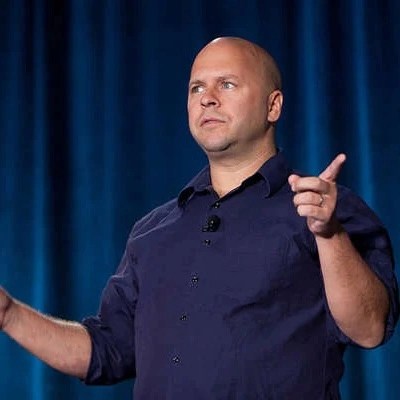
1. Naval Ravikant
Naval Ravikant, angel investor and founder of AngelList, is admired not just for backing early-stage giants like Twitter and Uber, but for his radically different take on success and productivity. While many chase endless hustle, Naval focuses on leverage, clarity, and deep thinking.
He avoids unnecessary meetings, rarely multitasks and doesn’t fill his calendar with shallow busyness. Instead, he invests his energy in learning, reflection, and decision-making. He often emphasises that clear thinking requires time alone and his strategy centres around doing fewer things but with massive, long-term payoff.
His mantra? “Play long-term games with long-term people.” That means building compounding relationships, making timeless decisions, and avoiding the trap of short-term dopamine-driven productivity hacks.
2. Brene Brown
As a bestselling author, researcher, and speaker, Brene Brown built a global brand. But not by working 16-hour days or saying yes to every request. She’s famously intentional about her time and deeply protective of her calendar.
Brown avoids over-committing and is known to carve out entire weeks for deep work or personal rest. She often reminds her audience that exhaustion is not a status symbol and teaches that real courage is about setting clear boundaries.
3. Derek Sivers
Entrepreneur, writer, and the founder of CD Baby, Derek Sivers built a multimillion-dollar company and then walked away from it. His philosophy: “If it’s not a hell yes, it’s a no.”
Sivers lives simply, avoids meetings unless essential, and designs his life around freedom and curiosity. Instead of chasing constant output, he values deep thinking, solo creation, and slow living. He’s written extensively about how doing less but better leads to more satisfaction and often, more success.
Books That Redefine Sustainable Productivity
If you’re ready to go deeper, here are a few must-reads that explore this idea powerfully:
1. The 4-Hour Workweek by Tim Ferriss
The book guides to design a life focused on freedom and purpose. It challenges conventional work norms and inspires a shift toward efficiency and lifestyle flexibility.
2. Essentialism: The Disciplined Pursuit of Less by Greg McKeown
Teaches the disciplined pursuit of less through a systematic approach for determining where our highest point of contribution lies, then making execution of those things almost effortless.
3. Rest: Why You Get More Done When You Work Less by Alex Soojung-Kim Pang
Explores how deliberate rest is not a luxury, but a productivity enhancer. Why we must treat work and rest as equals. It also gives examples of the rest habits of some of the most productive people working today.
Conclusion
Productivity, at its best, is a powerful tool. It enables us to build, create, and make a lasting impact. It gives shape to our ambitions and helps us lead purposeful lives. But when productivity becomes the master instead of the means, it starts to erode the very fulfilment it once promised. The value of our work shouldn’t be measured by sheer volume, it should be defined by intention, impact, and meaning.
Reframing productivity allows us to shift from exhaustion to effectiveness. It’s not about doing more, faster; it’s about doing what matters, with clarity and balance. When we align our efforts with our values, we protect our energy, avoid burnout, and make room for creativity.
It’s time to move from maximising hours to maximising impact, from burning out to burning bright. Let productivity serve you not control you. Take a moment today to rethink your rhythm. Redefine productivity on your terms and build a version of success that’s sustainable, meaningful, and entirely your own.
I am positive that you found this article informative and useful!
Please subscribe to my blog by filling in your details below:
My blog has countless such articles and stories to guide you and quench your thirst for knowledge.
You can also follow me on X and Facebook to read more such stories and posts.
PS: ChatGPT and/or Copilot have been used to create parts of this post.
Leave a Reply