
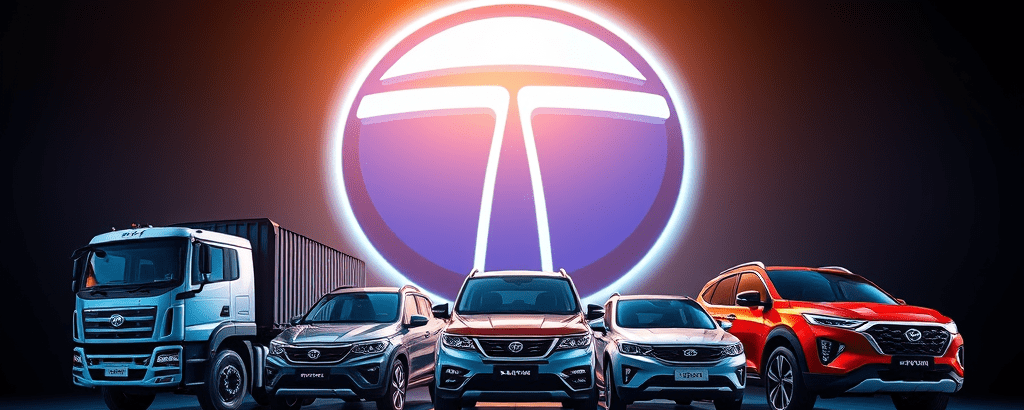
Tata Motors is a cornerstone of India’s industrial and technological journey. For over seven decades, the company has demonstrated the resilience and vision needed to thrive in the ever-changing automotive industry. As one of India’s largest automotive manufacturers, it has not only revolutionised the Indian automobile industry but also established a robust global presence.
The company’s innovations have made personal transportation accessible and affordable, profoundly impacting India’s economic and social dynamics. Globally, Tata Motors has earned a reputation for reliability and innovation, making it a trusted brand in numerous international markets.
What began as a modest engineering firm became a global powerhouse, exporting vehicles and ideas across continents. In this story, we will explore Tata Motors’ history and pivotal moments. Instances of bold decision-making and strategic pivots that turned challenges into opportunities, cementing its legacy as a company that drives innovation and progress.
The Tata Group
The Tata Group was founded by Jamsetji Tata in 1868. Initially focusing on textiles, the Group soon ventured into multiple industries, including steel, hospitality, and aviation. Jamsetji’s dream of industrialising India was carried forward by his successors, who continued to expand the group’s footprint. Today the Tata Group is one of India’s most respected business conglomerates. It is also one of the most diversified and caters to a vast range of products. Right from salt to software to supercars.
Known for its pioneering spirit, the group played a vital role in building India’s industrial backbone. One of the early notable ventures was Tata Steel in 1907. India’s first steel plant and one of the largest steel manufacturers globally. The iconic Taj Mahal Hotel was established in Mumbai in 1903. However, Tata’s ethos has always been about more than just business. It was the celebration of the ‘Free Enterprise’. This philosophy guided the group’s ventures, including its foray into automobiles.
“In a free enterprise, the community is not just another stakeholder in the business but is, in fact, the very purpose of its existence.”
Jamsetji Tata
The Genesis of TELCO
In 1945 the Tata Group established the Tata Locomotive and Engineering Company Limited (TLECO) in Jamshedpur. Jamshedpur had a good industrial infrastructure due to Tata Steel (then TISCO). Early products of TLECO were Steam Locomotives, Industrial Machinery and Steam Road Rollers. As India gained independence in 1947, TLECO shifted its focus to serve the nation’s transportation and infrastructure needs. TLECO started diversifying into commercial vehicle manufacturing.
In 1954, TLECO made a significant pivot. It entered a technical collaboration with Daimler-Benz AG to produce medium and heavy commercial vehicles in India. This collaboration provided TLECO, access to cutting-edge technology and manufacturing practices. The Tata-Mercedes Benz 312 truck was the first Indian commercial vehicle. It set new standards of quality and reliability in the Indian market.
This partnership lasted till 1969 by which time TELCO had gained sufficient expertise to develop its own vehicles. The significance of this tie-up to the Indian automotive sector was immense. It brought advanced technology and global standards to Indian soil. This partnership laid the groundwork for TELCO to establish itself as a leader in the commercial vehicle segment.
In 1960, in a significant move, the name TLECO was changed to TELCO (Tata Engineering and Locomotive Company). This shift reflected the company’s strategic pivot towards diversification into products beyond locomotives. It set the stage for TELCO to become a leader in commercial vehicles and eventually passenger cars.
Ruling the Indian Truck Market
The Mercedes-Benz 312 truck was a turning point for the Indian trucking industry. TELCO’s trucks quickly gained popularity for their durability and performance. Making them the preferred choice for transporters across the country. It was followed by the introduction of numerous other rugged and reliable trucks and buses that were ideally suited to Indian roads.
By the 1970s, TELCO had become the market leader in commercial vehicles, a position it has maintained ever since. A key pivot during this time was TELCO’s move to develop indigenous designs. This decision enabled the company to reduce its dependence on foreign technology and create cost-effective products tailored to Indian conditions.
The company’s commitment to innovation and customer satisfaction played a crucial role in this success. Additionally, the company’s extensive service network ensured that customers could rely on prompt and efficient after-sales support. Tata trucks soon became the backbone of India’s logistics and transportation sector.
Foray into Passenger Cars
In the 1990s, TELCO decided to enter the passenger car segment. It was a bold pivot challenging the dominance of established players like Maruti Suzuki and Hindustan Motors. In 1991 TELCO launched Tata Sierra. India’s first indigenously designed and manufactured Sports Utility Vehicle (SUV). The Sierra was a bold and innovative product. Featuring a three-door design, a spacious cabin, and a unique all-glass rear side panel, which gave it a futuristic look.
The Sierra was followed by the launch of Tata Estate a station wagon in 1992. The Estate was inspired by European design trends and offered premium features like power windows, power steering and a tachometer. Features unheard of for Indian cars at the time. The next big offering was the Tata Sumo a Multi-utility Vehicle (MUV) in 1994.
The market response to Tata Motors’ entry into the passenger car segment was cautiously optimistic. While the company’s engineering capabilities were evident, it faced challenges in understanding consumer preferences in the highly competitive passenger car market. Still, TELCO remained committed to its car business.
The Indica Project: A Turning Point
Late Shri Ratan Tata, the visionary chairman of the Tata Group, envisioned an affordable, fuel-efficient car for the Indian middle class. The Indica, designed and developed entirely in India, was the embodiment of his vision. A vehicle that was designed in India, made in India, and for India. The launch of the Tata Indica in 1998 was a defining moment for TELCO.
The Indica was revolutionary in several ways. It offered more space, fuel efficiency, and features than its competitors. It was affordable, making it accessible to the growing Indian middle class. Despite initial scepticism, the Indica became a runaway success, capturing the imagination of Indian consumers and establishing Tata Motors as a formidable player in the passenger car segment.
Financial Hardships & Revival
The early 2000s were a challenging period for Tata Motors. The company faced mounting losses, largely due to its ambitious expansion into passenger vehicles. The Indica’s success was followed by a series of less successful models, leading to mounting losses. Tata Motors was at a crossroads, facing the daunting task of reviving its fortunes while maintaining its commitment to innovation and quality.
At one point, there were discussions within the Tata Group about exiting the car business altogether. However, Ratan Tata’s unwavering belief in the company’s potential led to a strategic pivot. He famously told his team, “We will persevere.”.
Revival
Under the leadership of Ratan Tata, Tata Motors embarked on a comprehensive restructuring plan. The company streamlined its operations, reduced costs, and focused on core strengths. Strategic partnerships and investments in research and development were prioritised. The launch of the Tata Nano, the world’s cheapest car, in 2008 was a testament to Tata Motors’ resilience and innovative spirit.
This period of hardship became a turning point, showcasing the company’s resilience and ability to adapt. In a strategic move, the name Tata Engineering and Locomotive Company (TELCO) was simplified to Tata Engineering in 2003 and shortly thereafter to Tata Motors in 2004. The change reflected the company’s growing focus on automotive engineering and its evolution into a comprehensive automobile manufacturer with a global vision.
JLR Acquisition: A Global Pivot
In 2008, Tata Motors acquired Jaguar and Land Rover (JLR) from Ford for $2.3 billion. This was one of the most audacious moves in Indian corporate history. This acquisition was a pivotal moment for Tata Motors, marking its entry into the luxury car segment. Tata Motors’ strategic vision and commitment to preserving the heritage of JLR proved to be transformative.
JLR’s existing lineup, combined with its R&D capabilities, helped Tata Motors penetrate the luxury car market. The success of models like the Range Rover Evoque and Jaguar XF turned JLR into a profit engine for the company.
The JLR acquisition also marked Tata Motors’ transformation into a global automotive powerhouse. The company began leveraging JLR’s technologies and design expertise to develop new models for both domestic and international markets. Tata Motors expanded its footprint in Europe, North America, and China. It also strengthened its manufacturing capabilities, setting up plants in various countries.
Leading the EV Revolution
As the automotive industry shifted toward electric vehicles (EVs), Tata Motors seized the opportunity to lead the charge in India. Recognising the growing demand for sustainable mobility, the company launched the Tata Nexon EV in 2020. The Nexon EV quickly became India’s best-selling electric car. Thanks to its affordability, performance, and practicality. This success was supported by the Tata Group’s ecosystem. This included Tata Power for charging infrastructure and Tata Chemicals for battery technology.
Tata Motors’ EV lineup continues to grow, with a focus on affordability, performance, and green technology. The company’s investment in charging infrastructure and partnerships with government initiatives underscores its leadership in the EV space. By the end of 2025, Tata Motors aims to have a fully electrified portfolio, underscoring its commitment to sustainability.
The Legacy of Tata Motors
Tata Motors’ journey is a testament to the power of vision, resilience, and innovation. From its humble beginnings as a locomotive manufacturer to becoming a global automotive leader, Tata Motors has consistently embraced change and seized opportunities. The company’s commitment to quality, customer satisfaction, and sustainability has earned it a special place in the hearts of millions of consumers.
As the company continues to drive towards a sustainable future with its electric vehicle initiatives, its legacy as a pioneer in the automotive industry remains firmly intact. Tata Motors’ ability to pivot at crucial moments has not only shaped its destiny but also contributed to the transformation of the global automotive landscape.
I am sure you found this article interesting.
Please subscribe to my blog by filling in your details below:
My blog has countless such articles and stories to guide you and quench your thirst for knowledge.
You can also follow me on X and Facebook to read more such stories and posts.
PS: Copilot and ChatGPT have been used to create parts of this post.


Leave a Reply