
A company’s growth often hinges on its ability to spot pivotal opportunities and act decisively. Whether it’s securing a patent, acquiring a licence, or buying out a small business, timing can be everything. Nowhere is this strategic instinct more evident than in the story of portable storage. A breakthrough that reshaped the future of computing and how we interact with data.
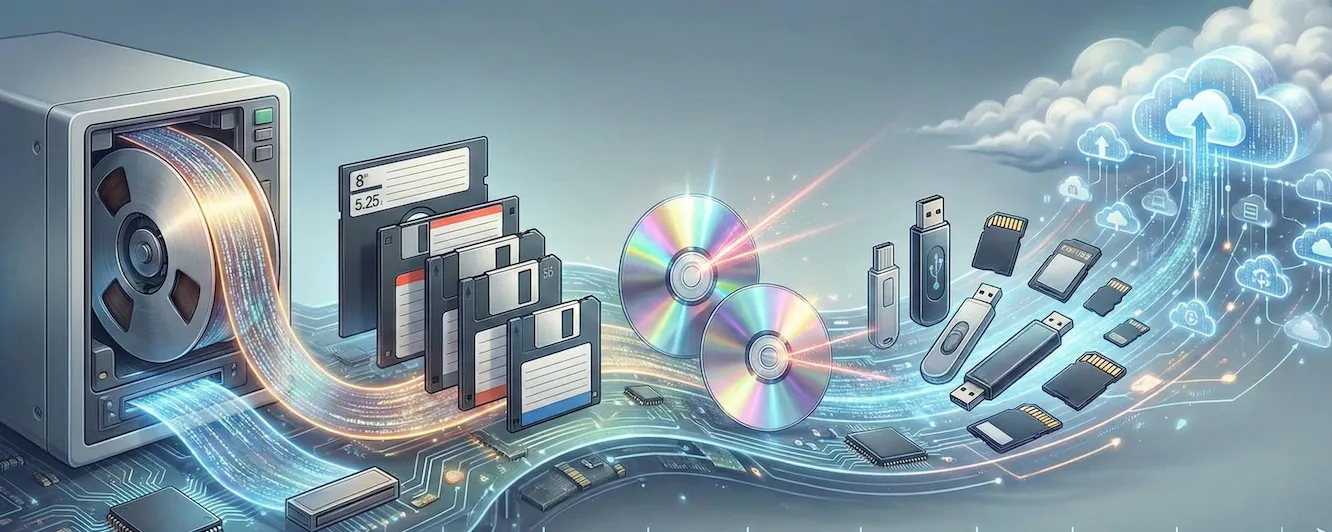
Portable storage has long been the backbone of computing. From clunky magnetic tapes to compact USB drives and today’s seamless cloud solutions, it has defined how we store, share, and move data. But in the 1970s, the idea of carrying data in our pocket still belonged to the realm of science fiction.
That was, until IBM made a game-changing move.
With a clear vision for accessible, mobile data, IBM turned to a promising innovation from Shugart Associates, the floppy disk. What began as a licensing deal soon became the cornerstone of a digital revolution.
This is the story behind that moment. One that helped launch the personal computer era and set us on a relentless journey toward ever more convenient, powerful ways to carry our digital world.
The Genesis of IBM
The Computing-Tabulating-Recording Company (CTR) was founded in 1911. It changed its name to IBM in 1924. Over the decades, it grew into a leader in business machines, punch card systems, and mainframe computers.

IBM quickly established itself as a leader in business machines. Their focus was on tabulating machines, used for processing large amounts of data, particularly for government and census applications.
By the 1960s, IBM became synonymous with computing. Its massive, room-sized systems ran everything from government agencies to large corporations. Its mainframes powered the world’s most critical calculations.
But while IBM was excelling at big business, something smaller was brewing on the horizon.
Personal computing.
The Shifting Sands of Computing
By the 1970s, the technological landscape started shifting. While mainframes remained critical for large organisations, the whispers of a new kind of computing were beginning to be heard. The advent of integrated circuits was shrinking the size and cost of electronic components, making computers more compact, accessible and affordable than ever before.
IBM still reigned supreme in the world of mainframes. Its System/370 series was the crown jewel, running mission-critical applications across industries. But change was in the air.
Smaller computers, dubbed minicomputers, were gaining popularity. More importantly, a new wave of enthusiasts, developers, and entrepreneurs were dreaming of something even more radical: computers that could sit on a desk, run at home, and serve individuals.
IBM wasn’t blind to this shift. The company understood that computing was about to become personal. But the success of personal computers would require something that mainframes never worried about. Portable storage.
This nascent trend, while not yet a roar, hinted at a future where computing power wouldn’t be confined to air-conditioned server rooms but might, perhaps, find its way onto desks and into homes.
Portable Storage: The Missing Link
Mainframes often relied on magnetic tape reels and bulky disk packs. While it was a step forward, it had a major drawback. It was sequential access. To retrieve a file, one had to wind through the entire tape to its exact location.
But as computing moved closer to the everyday user, the need for something better became clear. Personal computers needed portable storage. A compact, easy-to-use, and removable medium. One that let users save files, move programs, and boot systems without dealing with heavy tapes or complicated systems.
The demand was simple yet urgent: a storage solution that was reliable, affordable, and user-friendly. A tool that could bridge the gap between humans and machines, making data truly accessible.
This rising need for portable storage set the stage for a breakthrough, one that would change the way we use computers forever.
Shugart Associates: The Pioneers
In 1973, a small California company, Shugart Associates, set out to solve the growing need for portable storage. Founded by Alan Shugart, a visionary engineer who had already left his mark at IBM by leading the development of the hard disk drive. Now, with his own team, Shugart was focused on making storage smaller, simpler, and more accessible.

He saw the future. As minicomputers and microcomputers began to emerge, they needed a storage solution that was compact, affordable, and easy to use.
Shugart’s team developed the 8-inch floppy disk. A flexible magnetic disk enclosed in a protective sleeve. It could store between 80 to 256 kilobytes of data, a remarkable feat at the time. But its true magic was in its form: lightweight, low-cost, and easy to handle.
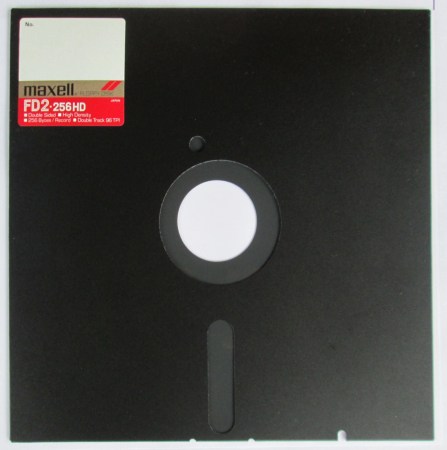
The floppy disk offered an ideal blend of speed, capacity, and portability. It was the first real answer to the portable storage challenge. More than just a technical achievement, it became a bridge between machines and users. Making data transfer practical and personal.
Shugart’s invention laid the foundation for a standardised format that would be adopted across the computing world.
It was the portable storage breakthrough IBM had been waiting for.
How IBM Got the Floppy Disk
IBM quickly saw the promise of the floppy disk as the ideal portable storage solution for its upcoming products, especially as it moved toward the personal computer market. The floppy disk was simpler, cheaper, and better suited for everyday users.
In 1973, IBM licensed the 8-inch floppy disk technology from Shugart Associates. The licensing fee was never publicly revealed, but it was modest by industry standards. Rather than acquiring Shugart, IBM secured the rights to manufacture and distribute the drives under its own brand.
IBM then standardised the floppy disk format, giving it instant credibility and helping drive widespread adoption across the industry. It was a smart, strategic move. One that highlighted IBM’s ability to spot valuable external innovation and turn it into a core part of its business.
This timely investment in portable storage laid the groundwork for the personal computing revolution that followed.
The Rise of the PC
With portable storage now part of its toolkit, IBM moved quickly. It began using floppy disk drives internally for mainframes, but the real breakthrough came in 1981 with the launch of the IBM Personal Computer (PC).
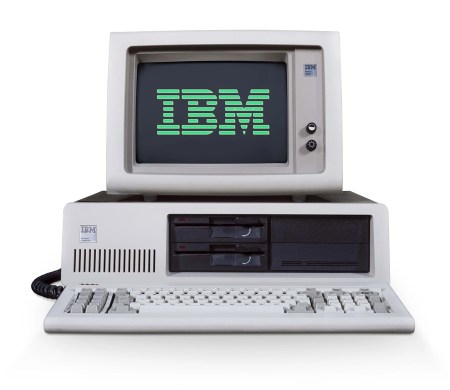
The IBM PC featured a 5.25-inch floppy disk drive, a smaller version of the original 8-inch model. These disks became the standard in portable storage for years. Users could boot operating systems, install software, and save data. All from a thin, lightweight disk that could fit in a shirt pocket.
For software developers, it was revolutionary. They could easily distribute programs on floppies. For users, it was simple and empowering. No bulky tapes or complicated installations. Just insert the disk and start working.
This leap in portable storage made software development and distribution accessible to everyone, not just large corporations. It sparked a wave of innovation, enabling small companies and solo developers to thrive. Around the IBM PC, a vibrant software ecosystem emerged, and it all began with a floppy disk.
The floppy disk was more than just a portable storage device. It was freedom.
Fuelling the PC Revolution
The floppy disk was the missing link that turned personal computers from niche gadgets into everyday essentials. Before this innovation, PCs were little more than advanced calculators, limited by small internal memory and clunky ways of loading new programs.
IBM’s move to adopt and champion portable storage through floppy disks changed everything. It helped set industry standards. As IBM-compatible PCs flooded the market, manufacturers made sure to include floppy drives.
Software giants like Microsoft and Lotus embraced the format, delivering their programs on floppies. Even entire operating systems like MS-DOS and Windows arrived on a stack of these compact disks.
Suddenly, a PC could be anything. A word processor, a spreadsheet machine, a database tool, or even a gaming device, just by popping in a different disk. This simple, reliable portable storage gave users the power to transform their computer instantly.
Classrooms, offices, and homes soon filled with those iconic plastic squares, each carrying data, memories, or entertainment. Floppy disks made computing accessible, affordable, and portable.
Evolution of Portable Storage Devices
The floppy disk marked the beginning of a remarkable journey in portable storage. It introduced the idea that data could be easily carried, shared, and reused. Over time, demand for more space and smaller sizes led to the sturdier 3.5-inch floppy, which held 1.44 MB.
Next came Zip drives with up to 750 MB capacity, popular among professionals needing more space. Then the CD-ROM changed everything, offering 700 MB of read-only storage. CD-RWs added writability, and DVDs pushed capacities to over 8 GB, enabling high-quality video and complex software installations.
By the 2000s, floppy disks were fading. But their influence remained. The concept of portable storage, plugging in a device to move or back up files, was here to stay.
Then came the USB flash drive: compact, durable, and powerful. With no moving parts and storage expanding into terabytes, it quickly became the standard for everyday use. External hard drives followed suit, offering huge capacities for serious backup needs..
The Paradigm Shift to the Cloud
As portable storage evolved, a major shift took off in the 2010s: cloud storage.
Faster internet and constant connectivity made it possible to store files remotely and access them from anywhere. Services like Dropbox, Google Drive, OneDrive, and iCloud changed the game.
You no longer needed to carry a physical device. Your files were always available, synced across devices, and backed up automatically. This evolution redefined portable storage. It became virtual, seamless, and far more reliable.
Collaboration also became easier, as multiple users could edit and share documents in real time. The cloud turned data into something fluid, mobile, and ever-present. Marking a true leap in how we manage information.
Future Trends in Storage
The future of portable storage is full of promise. While cloud storage remains dominant, both physical and virtual options are evolving rapidly. Solid-State Drives (SSDs), now standard for many computers, are faster, more durable, and increasingly affordable, making them ideal for external portable storage.
Emerging memory technologies like memristors and phase-change memory may soon offer even faster speeds, better endurance, and lower power use, enabling more compact and powerful storage devices.
Edge computing is also reshaping the landscape, driving demand for localised, high-speed storage to handle real-time data from IoT devices, smart cities, and autonomous vehicles.
Looking further ahead, quantum storage offers a fascinating glimpse into what’s possible. Though still in early research stages, it could one day deliver vast storage density and unmatched security.
Conclusion
IBM’s adoption of the floppy disk from Shugart Associates was a landmark moment in tech history. This simple innovation became the cornerstone of portable storage, making personal computing practical and widespread.
It enabled easy software distribution, data sharing, and user-friendly computing, ushering in the digital age. The floppy disk’s success proved that transformative change often begins with a modest idea that solves a real problem.
As storage continues to evolve, from sleek drives in our pockets to invisible data in the cloud and the edge, portable storage is transforming how we access, share, and protect our digital lives, the core need remains the same: seamless, accessible, and reliable portable storage that empowers people to work, share, and create anywhere.
I am positive that you found this article informative and useful!
Please subscribe to my blog by filling in your details below:
My blog has countless such articles and stories to guide you and quench your thirst for knowledge.
You can also follow me on X and Facebook to read more such stories and posts.
PS: Gemini and/or ChatGPT have been used to create parts of this post.
Leave a Reply